Little Scientists Big Discoveries: A Hands-On Science Resource for Curious Kids
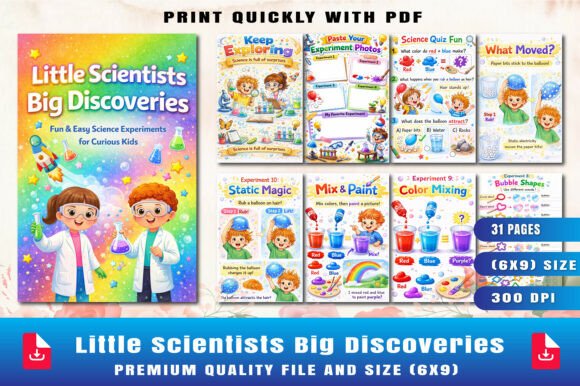
Introducing children to science through hands-on activities can feel overwhelming for parents and educators. With countless workbooks, kits, and online apps available, choosing the right resource requires careful thought. Little Scientists Big Discoveries is a printable science activity eBook designed to make early science exploration accessible and engaging. This 30-page resource combines simple experiments, observation prompts, quizzes, and motivational elements in a colorful, kid-friendly format. For adults who want to encourage curiosity without requiring extensive prep or expensive materials, this product offers a structured yet playful approach. However, evaluating how it compares with other options helps determine if it fits your specific needs.
What Makes Little Scientists Big Discoveries Distinct?
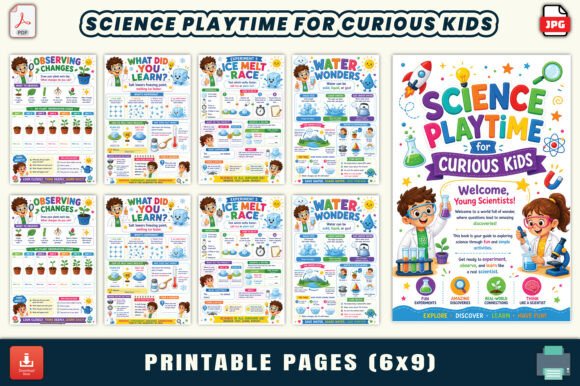
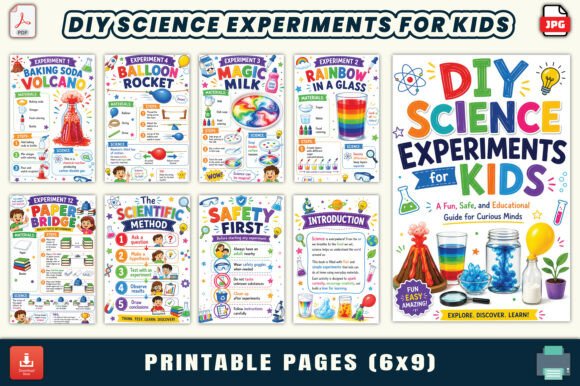
Unlike a traditional textbook or a subscription box, Little Scientists Big Discoveries is a digital printable file that you can use repeatedly. It includes step-by-step experiment instructions, spaces for children to record predictions and observations, drawing pages, mini quizzes, and even a certificate for young scientists. The design features bright pastel backgrounds, cute lab icons, and cartoon characters that appeal to early elementary-aged children. The page size is 6×9 inches, making it easy to print at home or bind into a small booklet. The file comes in both JPG and PDF formats, offering flexibility for different devices or printing setups.
One distinct advantage is that this resource integrates multiple activity types into one cohesive package. Instead of hunting for separate experiment cards, observation sheets, and reward materials, you have everything in one place. The simple science explanations are written in plain language, making it easier for adults to explain concepts without needing a science background. For parents or teachers who value structure and time savings, this all-in-one design is a notable strength.
Comparing Formats: Printable Book vs. Other Science Resources
When choosing a science activity resource, the format matters. Little Scientists Big Discoveries is a printable PDF, which places it somewhere between a physical workbook and a fully interactive digital experience. Understanding the tradeoffs of each format helps clarify when this resource is the best fit.
Digital Printables vs. Physical Books
Physical science activity books are widely available at bookstores and online. They offer the convenience of no printing, but you cannot customize or reuse pages easily. With Little Scientists Big Discoveries, you can print only the pages you need or repeat experiments multiple times. This is especially useful for families with more than one child or for teachers who want to make copies for a classroom. On the other hand, a physical book is ready to use immediately and may include thicker paper for drawing or writing. If you lack access to a reliable printer, a physical book might be more practical. The printable format also requires time for setup—printing, cutting, and possibly binding—which can be a barrier for busy adults.
Printable vs. Interactive Online Activities
Many science apps and websites offer animated experiments, videos, and quizzes that respond to a child’s input. These can be highly engaging and require no printing. However, screen time is a growing concern for many parents. Little Scientists Big Discoveries provides an offline, tactile experience that encourages children to write, draw, and manipulate real objects. For families aiming to reduce screen exposure while still exploring science, this printable resource is a strong alternative. Yet online platforms often offer a broader range of topics, instant feedback, and adaptive difficulty, which a static PDF cannot match. If a child thrives on gamification and immediate rewards, an app might be more motivating.
Structured Experiments vs. Open-Ended Exploration
Some resources, like science kits or discovery boxes, emphasize open-ended exploration with loose parts and minimal instructions. Others, like textbooks, follow a rigid curriculum. Little Scientists Big Discoveries strikes a middle ground: it provides clear experiment steps and prompts but also allows space for creativity through drawing pages and prediction activities. The structured format helps children learn the scientific method step by step, which can be valuable for building foundational skills. However, for free-spirited learners who prefer to tinker without predetermined outcomes, a more open-ended approach may be better suited. The key is matching the resource’s structure with the child’s learning style.
Strengths and Tradeoffs of This Approach
Every educational tool has strengths and limitations. Understanding them helps you decide whether Little Scientists Big Discoveries aligns with your goals.
Strengths: Engagement, Simplicity, Motivation
The colorful design and friendly characters immediately capture attention, making science feel approachable rather than intimidating. The experiments use common household items like baking soda, vinegar, or paper clips, so there is no need to purchase specialized supplies. The inclusion of a Junior Scientist Certificate and a motivational closing page adds a sense of accomplishment that can encourage further exploration. For adults who want to build a positive association with science early on, these elements are effective. Additionally, the observation pages teach children to record what they see, a skill that transfers well to school science classes.
Tradeoffs: Scope, Preparation, Age Range
With 30 pages, the resource offers a limited number of experiments—likely around 10 to 15 activities, depending on the included observation sheets and quizzes. For a child who quickly finishes the experiments, you may need supplementary activities to maintain momentum. The target audience appears to be children around ages 4 to 8, but the product does not specify an exact age range. Some activities may be too simple for older children or require reading skills that younger preschoolers lack. Adults should preview the content to ensure it matches their child’s abilities. Moreover, although the PDF is print-ready, you still need to organize and prepare the materials for each experiment. This takes more upfront effort than handing a child a pre-assembled kit.
Who Is This Resource Best For?
Little Scientists Big Discoveries is particularly well suited for parents of preschool through early elementary children who want a gentle introduction to science. It also works well for homeschoolers who need a low-cost, reusable supplement to their curriculum. Teachers in kindergarten or first-grade classrooms could use it for science centers or take-home activity packs. Activity creators or caregivers looking for a screen-free option will appreciate the printable format. If you value structure, simplicity, and motivational rewards, this resource aligns with those priorities.
When Might You Consider Other Options?
If your child is older than 8 or already has a solid grasp of basic scientific concepts, Little Scientists Big Discoveries may feel too elementary. In that case, a more advanced experiment book or a kit with real lab tools might be more appropriate. Similarly, if you prefer all-digital, interactive learning, an app or online platform could provide deeper engagement. For adults who lack time to print and assemble activity pages, a ready-to-use physical workbook or a subscription box delivered to your door may be more convenient. Finally, if your goal is to cover specific science standards in depth, a curriculum-aligned textbook or unit study might be necessary.
Practical Decision Factors to Keep in Mind
Cost is often a primary consideration. Little Scientists Big Discoveries is typically priced as a digital download, which is generally lower than a printed book or a kit. You also have the flexibility to print only the pages you need. However, factor in the cost of ink, paper, and optional binding if you plan to print the entire resource. Time is another factor: preparing the experiments requires gathering materials and reviewing instructions. If you have limited time, look for resources that are more “open and go.” Learning goals also matter—if you want to foster scientific thinking rather than just memorization, the observation and prediction pages in this resource support that well. For a child who loves drawing and writing, the included activities will be a hit; for a child who prefers hands-on building or technology, other formats may be more engaging.
Final Thoughts on Choosing a Science Activity Resource
Selecting the right science activity resource depends on your child’s age, interests, and learning environment, as well as your own time and budget. Little Scientists Big Discoveries offers a balanced blend of guided experiments and creative expression in a printable, reusable format. Its strengths lie in its simplicity, visual appeal, and motivational extras. For many families and educators, it serves as a practical starting point for hands-on science discovery. At the same time, no single resource meets every need. By comparing the format, preparation requirements, and scope with other options, you can make an informed choice that best supports a child’s natural curiosity. Whether you choose this printable book or another path, the most important factor is creating a positive, curious environment where children feel safe to ask questions and explore the world around them.