Science Playtime for Curious Kids: A Strategic Resource for Intentional Learning and Creative Engagement
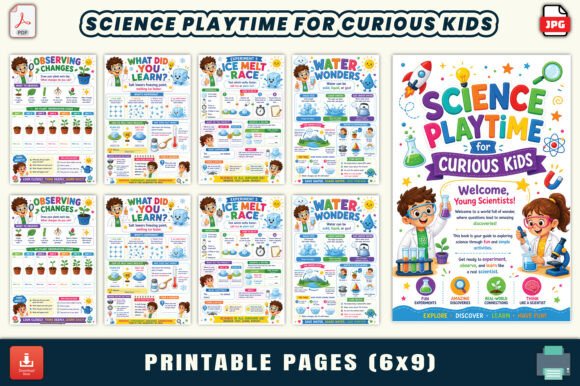
When you are responsible for shaping young minds—whether as an educator, a parent, a homeschool coordinator, or a content creator—the materials you choose carry weight. Every worksheet, every experiment guide, every printable resource either builds toward something meaningful or becomes another piece of clutter in an already busy day. Science Playtime for Curious Kids is a 30-page eBook in JPG and PDF formats that positions itself as a tool for sparking curiosity through hands-on science. But beyond its colorful pages and kid-friendly language, this resource deserves a closer look from a strategic standpoint. How can you use it to support your goals, your curriculum, your brand, or your family’s learning rhythm? And what should you consider before you press print?
What Science Playtime for Curious Kids Actually Contains
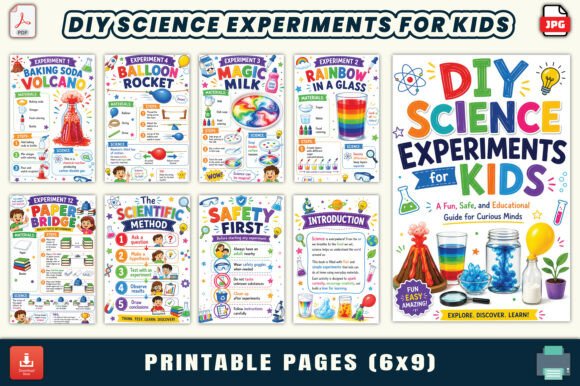
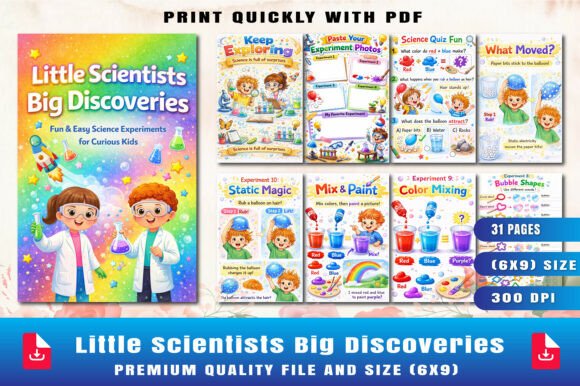
At its core, this is a downloadable collection of 30 pages designed at a 6 × 9 inch size, delivered in both JPG and PDF formats. The content focuses on simple, hands-on science experiments that introduce basic concepts from biology, physics, and chemistry—plants, water, air, light, motion, and force. Each page is intended to be visually engaging and instructionally straightforward, making it accessible for young learners and the adults guiding them.
For anyone who has tried to pull together a science activity from scratch, you know the friction: sourcing materials, writing clear steps, explaining concepts in age-appropriate language, and designing a layout that holds attention. This eBook attempts to remove that friction. It is print-ready, digital-friendly, and structured around the idea that learning happens best when it feels like play.
But the strategic value of a resource like this goes beyond convenience. It lies in how you position it within a larger plan.
Why Thoughtful Use Matters More Than the Resource Itself
It is tempting to treat a ready-made resource as a quick fix. Download, print, hand to a child, check the box. That approach may work for occasional busy days, but it rarely produces the kind of engagement that leads to genuine curiosity or long-term retention. The difference between a throwaway activity and a meaningful learning experience often comes down to intention.
Science Playtime for Curious Kids becomes strategically useful when you align it with a clear goal. That goal might be introducing a specific concept like buoyancy or magnetism. It might be building a habit of observation and questioning. It might be creating a shared experience between a parent and child that opens the door to deeper conversations. When you know why you are using a particular experiment, your guidance becomes sharper, and the child’s experience becomes richer.
For educators and homeschoolers, this means mapping each activity to a learning objective. For content creators and publishers, it means thinking about how the material supports your audience’s needs and fits into your broader content ecosystem.
Educators and Classroom Teachers
If you are teaching in a classroom or a co-op setting, time is your scarcest resource. You need materials that are easy to distribute, low-prep, and reliable. The PDF and JPG formats allow you to print single pages for individual stations or project them onto a screen for group discussion. The 6 × 9 size is compact enough to include in take-home packets or learning folders.
A strategic approach might be to select three experiments that build on each other over a week, using each page as a launching point for group conversation. For example, start with an activity about air pressure, then move to motion, then connect both to how airplanes fly. The eBook gives you the experiment; you provide the sequence and the context.
Homeschooling Parents and Caregivers
Homeschooling often requires balancing structure with flexibility. A resource like this can serve as a reliable anchor for your science block, especially if you are new to teaching STEM concepts. Instead of designing experiments from scratch, you can draw from the 30 pages and build a simple rhythm: one experiment per week, with time for discussion, drawing, and follow-up questions.
The key is to avoid doing every page in random order. Look through the full set first. Group experiments by theme or difficulty. Plan around materials you already have at home. This reduces friction and increases the likelihood that you will actually use the resource consistently.
Content Creators, Bloggers, and Publishers
If you create content for parents or educators, your audience is always looking for practical, ready-to-use resources. Science Playtime for Curious Kids can be positioned as a lead magnet, a bonus inside a paid course, or a supplement to a blog post series on early STEM learning. Because it is delivered in JPG and PDF, you can preview individual pages in social media posts or email newsletters without giving away the entire collection.
The high-quality design and kid-friendly format also make it suitable for bundling with other resources around curiosity, play-based learning, or screen-free activities. The strategic question is not whether the content is good—it is whether it aligns with the specific needs and expectations of your audience. If your community values low-prep, print-and-go activities, this resource fits naturally.
Planning Tips for Maximum Impact
To use Science Playtime for Curious Kids intentionally rather than randomly, consider the following planning steps:
- Preview the entire collection first. Do not jump into printing all 30 pages immediately. Skim each experiment, note the materials required, and identify any concepts that are new or challenging for your child or students.
- Sequence experiments by concept, not by page number. Group related activities together. For example, gather all experiments that explore water before moving on to those that explore light. This reinforces conceptual understanding.
- Set a realistic schedule. One experiment per week is often more sustainable than trying to do several in a single session. Spacing out the activities gives time for reflection, repetition, and spontaneous curiosity.
- Prepare materials in advance. Nothing kills momentum like searching for a missing ingredient. Check each experiment’s supply list and batch your preparation.
- Document the learning. Have children draw or write about what they observed. This turns a one-time activity into a record of discovery that you can revisit later.
Possible Risks of Using the Resource Without Clear Goals
Any resource can underdeliver if it is used without context. The most common risk with a printable eBook like this is treating it as a stack of busywork. If a child is handed a page without explanation, without hands-on experimentation, and without a chance to ask questions, the experience becomes shallow. The colorful design and clear instructions cannot compensate for a lack of adult engagement.
Another risk is overwhelm. Thirty pages can feel like a lot, especially if you try to use them all at once. That is why strategic curation matters. Choose a handful of experiments that align with your current learning goals, and set the rest aside for later. This keeps the experience focused and manageable.
For content creators, the risk is misalignment. If your brand is built around deep, multi-sensory learning experiences or project-based inquiry, a simple printable may feel out of place. Know your audience well enough to decide whether a resource like this supports their needs or undermines your positioning.
Long-Term Value Beyond the Experiments
What makes Science Playtime for Curious Kids more than a one-time activity pack is its potential to build habits. When used consistently, these short experiments train young learners to observe closely, ask causal questions, and test ideas. Those are not just science skills—they are life skills. They support critical thinking, patience, and a willingness to be surprised.
For adults, using the resource can also be a teaching moment in how to plan, facilitate, and reflect. Each experiment is an opportunity to practice the art of guided discovery: knowing when to step in, when to step back, and how to frame a question that leads to insight. Over time, you become more skilled at designing learning experiences, even beyond the pages of this eBook.
Decision-Making Guidance: Is This Resource Right for You?
Before you download or recommend Science Playtime for Curious Kids, ask yourself a few questions:
- Do you need a low-prep, print-ready collection of science activities for children aged approximately 4 to 8?
- Are you comfortable supplementing the experiments with your own questions and conversation?
- Do you have a clear sense of what you want children to learn or experience through these activities?
- Are you prepared to gather materials and facilitate the experiments rather than simply handing over a worksheet?
If you answered yes to most of these, the resource can be a valuable addition to your toolkit. If you are uncertain about the goals or the time commitment, start small. Print one page. Try it with a child. Observe the outcome. Then decide whether to expand.
Final Thoughts on Using Science Playtime Intentionally
The best educational resources are not the ones that do the work for you. They are the ones that make your work easier and more effective. Science Playtime for Curious Kids offers a solid foundation of ready-to-use experiments, but its real value emerges when you bring your own planning, context, and curiosity to the table. Whether you are a parent looking for quality time with your child, a teacher building a unit plan, or a content creator serving a community of learners, this eBook can support your goals—provided you use it with intention.
Turn learning into play by design, not by accident. That is where the real discovery happens.