DIY Science Experiments for Kids: A Practical Resource for Hands-On STEM Learning
Introducing children to science through hands-on activities is one of the most effective ways to build curiosity, critical thinking, and a lasting interest in how the world works. DIY Science Experiments for Kids is a 30-page eBook designed to help parents, educators, and homeschoolers do exactly that. Offered in both JPG and PDF formats with a compact 6×9 inch page size, this guide focuses on accessible, safe, and engaging experiments that use everyday materials. This article offers a practical evaluation of what this resource includes, who it serves, and how it performs in real-world learning environments.
What This eBook Offers and Why It Matters
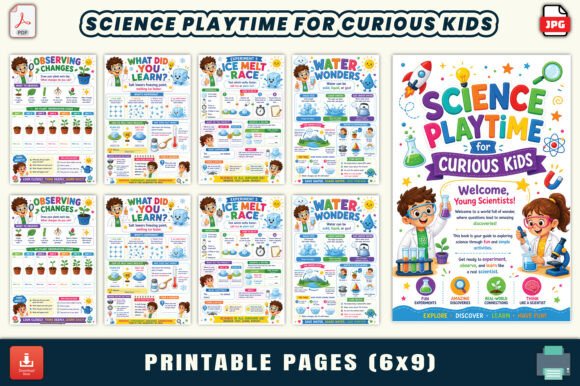
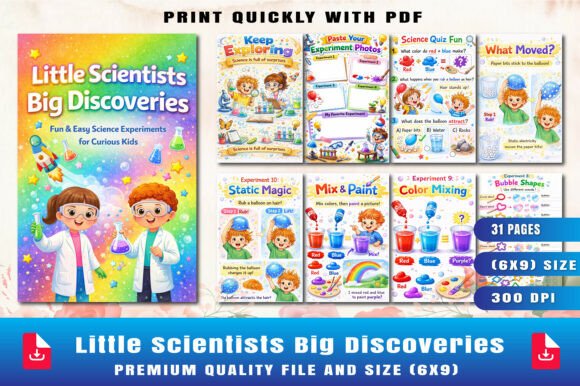
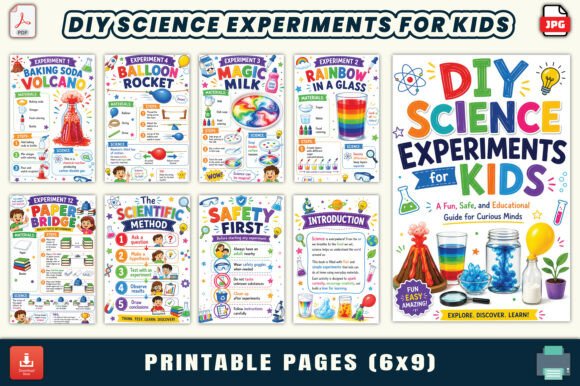
The core value of DIY Science Experiments for Kids lies in its straightforward approach to science education. Rather than requiring specialized lab equipment or complex setups, the eBook features 26 experiments that rely on items commonly found around the home. Activities such as the baking soda volcano, rainbow in a glass, magic milk, balloon rocket, magnetic fun, and simple circuits are presented with clear materials lists, step-by-step instructions, and brief science explanations that make the underlying concepts understandable for young learners.
Each page is designed with a clean, visually engaging layout that balances instruction with illustration. The 6×9 inch format is practical for both digital viewing and printing, making it a flexible tool for different teaching scenarios. The inclusion of both JPG and PDF formats allows users to display pages on a tablet or computer, print individual activity sheets, or compile the entire collection as a booklet.
Accessibility and Low Barrier to Entry
One of the most significant strengths of DIY Science Experiments for Kids is its emphasis on accessibility. The materials list for each experiment consists of common household items such as baking soda, vinegar, food coloring, milk, balloons, magnets, and basic craft supplies. This eliminates the need for advance planning or special purchases, making it easy to start an activity on short notice. For parents and teachers with limited time or budget, this practicality is a meaningful advantage.
Clear Instructions and Kid-Friendly Explanations
The step-by-step instructions are written in plain language suitable for both adults and older children to follow. Each activity includes a simple explanation of the scientific principle at work, helping kids connect the hands-on experience to broader concepts in chemistry, physics, and biology. This balance of doing and understanding is what separates a mere activity from a genuine learning opportunity.
Curriculum Versatility
The eBook covers a range of scientific disciplines, including basic chemistry (baking soda volcano, magic milk), physics (balloon rocket, simple circuits), and observational science (rainbow in a glass, magnetic exploration). This breadth makes it suitable for supplementing formal lesson plans, supporting homeschool curricula, or simply providing structured weekend or holiday activities.
Real-World Usability and Performance
In practical use, DIY Science Experiments for Kids performs well across several dimensions. The instructions are typically concise enough to hold a child's attention while providing sufficient detail to ensure successful execution. The science explanations are straightforward and avoid overly technical jargon, which helps adults who may not have a science background feel confident guiding the activities.
The page size and layout are functional for both individual and group settings. When printed, each page fits neatly into a binder or folder, and the JPG format allows for easy sharing in digital classrooms or on private family networks. The visual design is clean and inviting, though not overly elaborate, which keeps the focus on the activity rather than decoration.
One realistic limitation is that the eBook does not include troubleshooting tips or extended variations for each experiment. While the instructions are clear, some activities may require adult adjustment based on available materials or the child's age. More experienced educators may find themselves supplementing the explanations with additional context or follow-up questions. That said, for its intended purpose as a straightforward activity guide, this is a minor constraint.
Effectiveness Across Age Groups
The experiments are generally suitable for children aged 4 to 12, with younger kids benefiting from more adult assistance and older children able to work more independently. The simplicity of the materials and instructions makes the eBook particularly useful for early elementary grades, while some activities—such as simple circuits and magnetic exploration—offer enough depth to engage older students when paired with further discussion.
Who Benefits Most from This Resource
DIY Science Experiments for Kids is best suited for several distinct audiences:
- Homeschooling parents looking for ready-to-use science activities that align with a flexible, hands-on learning approach. The eBook provides structure without being rigid, allowing parents to pick and choose experiments based on their current lesson topics.
- Classroom teachers in early elementary or preschool settings who need simple, low-cost activities for science centers, group work, or special event days. The clear instructions reduce prep time and make it easier to delegate activities to classroom aides or parent volunteers.
- After-school program coordinators and camp leaders seeking quick, engaging experiments that require minimal setup and cleanup. The variety of experiments ensures that children remain interested across multiple sessions.
- Parents who want to encourage STEM learning at home but lack a science background themselves. The kid-friendly explanations and common materials reduce the intimidation factor and make science feel approachable.
- Content creators and bloggers in the parenting, education, or homeschool niche who need reliable, reproducible activity ideas for their own articles, social media content, or workshop materials. The eBook serves as a practical reference for planning content calendars.
Quality, Presentation, and Long-Term Value
The design quality is functional and appropriate for its target audience. Pages are laid out with clear headings, numbered steps, and distinct sections for materials, procedure, and explanation. The color palette is engaging without being distracting, and the illustrations support the instructions without overwhelming them. The consistent structure across all 26 experiments makes navigation easy, whether the user is flipping through the PDF or browsing individual JPG files.
In terms of long-term value, DIY Science Experiments for Kids holds up well because the experiments are classic, proven activities that children continue to enjoy across generations. The baking soda volcano, magic milk, and balloon rocket are not new concepts, but their reliability and appeal are well established. The eBook packages them in a convenient, ready-to-use format that saves adults the time of researching and compiling instructions from multiple sources. As children grow, the experiments can be revisited with deeper explanations or used as springboards for more advanced projects.
The digital format also contributes to longevity. Unlike a printed book that can become worn or outdated, the PDF and JPG files can be stored indefinitely, reprinted as needed, and shared within a household or classroom. The page size is small enough to store on a tablet or phone, making it easy to pull up an activity while in the kitchen or at the dining table.
Practical Recommendations for Getting the Most Out of This eBook
To maximize the value of DIY Science Experiments for Kids, consider the following approaches:
- Preview each experiment before presenting it to a child. While the instructions are clear, testing the activity yourself ensures you understand the steps and can anticipate any questions or adjustments.
- Pair experiments with related books or videos. The science explanations in the eBook are brief, so supplementing with a picture book, a short video clip, or a discussion question can deepen understanding.
- Create a simple observation journal. Have children draw or write what they predict, observe, and learn from each experiment. This reinforces the critical thinking and documentation skills that are central to scientific inquiry.
- Use the JPG format for digital presentations. If teaching remotely or displaying on a screen, the JPG images can be inserted into slides, shared on a class website, or printed as individual cards.
- Repurpose experiments for different age levels. For younger children, focus on the sensory experience and vocabulary. For older children, introduce variables—such as changing the amount of vinegar in the volcano or testing different liquids in the rainbow in a glass—to encourage experimentation.
Who May Find This Less Suitable
While DIY Science Experiments for Kids serves a broad audience well, it may be less ideal for those seeking in-depth scientific theory, advanced experiments for middle or high school students, or activities that require specialized equipment. The eBook is deliberately introductory in scope. Parents or educators working with older students may need to layer additional content onto the activities to maintain engagement and challenge. Similarly, those looking for a complete science curriculum rather than a supplementary activity guide may find the eBook limited in scope.
Final Assessment
DIY Science Experiments for Kids delivers on its promise of providing simple, hands-on science activities using everyday materials. Its practical format, clear instructions, and kid-friendly explanations make it a useful tool for anyone responsible for teaching or entertaining children in a learning context. The eBook earns its place as a reliable reference for homeschool lessons, classroom activities, weekend projects, and STEM enrichment at home. While it does not attempt to replace a formal curriculum or provide deep theoretical background, it excels at what it sets out to do: make science accessible, fun, and educational for young children and the adults guiding them.