Happy Kids Planner: A Practical Growth System for Children
When children begin taking on more responsibility—managing homework, chores, and after-school activities—a simple to-do list often falls short. What works better is a system that feels less like a chore and more like a game. That is precisely the idea behind the Happy Kids Planner, a tool designed to blend structure with creativity so that children can build habits without feeling overwhelmed.
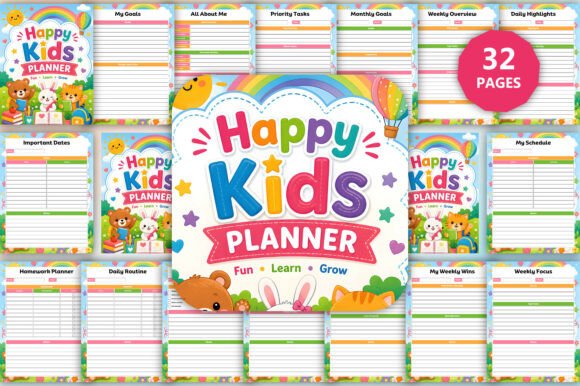
Unlike a standard agenda, this planner includes daily, weekly, and monthly layouts alongside trackers for reading, screen time, and chores. It also encourages goal-setting and personal reflection. The result is a resource that supports both academic tasks and personal development in one place.
Building Daily Routines That Stick
One of the biggest challenges for parents is helping children establish consistent morning and evening routines. Without a clear guide, mornings can turn chaotic, and evenings often end with forgotten homework or missed bedtime steps. The Happy Kids Planner includes dedicated morning and evening routine pages that break down tasks into simple, visual steps. A child can check off brushing teeth, packing a school bag, or reading before bed without needing constant reminders.
This approach reduces friction for both the child and the parent. Instead of repeating instructions, you let the planner act as a gentle guide. Over time, the child internalizes the sequence of tasks, moving from conscious effort to automatic habit. The bright, colorful design makes the process inviting rather than tedious, which is essential for young learners who are still developing executive function skills.
Supporting School and Homework Organization
Homework management can quickly become a source of stress in any household. Children juggle multiple subjects, deadlines, and after-school commitments. The Happy Kids Planner provides a dedicated school and homework section where students can record assignments, track due dates, and note upcoming tests. This visibility helps the child prioritize tasks and reduces the likelihood of last-minute panic.
Each daily and weekly spread includes space for listing study tasks, so the child learns to break larger projects into manageable steps. For example, a science project that spans two weeks can be mapped out day by day, making the work feel less intimidating. Parents and children can review the planner together during homework time to ensure nothing slips through the cracks. This shared attention also opens the door for conversations about time management and resourcefulness.
Encouraging Goals and Personal Growth
Goal-setting is often reserved for adults, but children benefit greatly from learning how to identify what they want to achieve and track their progress. The Happy Kids Planner includes sections for personal goals and achievement tracking, which can cover anything from reading a certain number of books to practicing an instrument or learning a new skill. When a child sees their own progress written down, it builds confidence and reinforces the idea that effort leads to results.
A realistic use case might be a child who wants to improve their handwriting. They could set a weekly goal, practice for ten minutes each day, and mark their progress in the planner. At the end of the month, they have concrete evidence of improvement. This cycle of intention, action, and reflection is a powerful learning tool that extends far beyond the pages of any planner.
Managing Screen Time and Responsibilities
Screen time is a common concern for families, and tracking it manually can be cumbersome. The Happy Kids Planner includes a screen time tracker that lets children log how much time they spend on devices each day. This is not intended as a punishment tool but as a way to build awareness. When a child records their screen time alongside other activities like reading or outdoor play, they start to see the balance—or imbalance—for themselves.
The chore responsibility tracker works in a similar way. Rather than nagging, you let the planner serve as the reminder. Children can check off tasks like making the bed, setting the table, or tidying their room. The visual nature of the tracker makes completion satisfying, and many parents find that children become more self-reliant when they have a clear list to follow. This system works especially well for families who use allowance, reward charts, or milestone-based incentives, because the planner supplies the needed structure.
Who Benefits Most from This Approach
The Happy Kids Planner is most valuable for families with children between roughly six and twelve years old. At this stage, kids are capable of handling basic responsibilities but still benefit from visual cues and structured formats. Parents, educators, and caregivers who want to reduce daily friction and support independence will find the planner particularly useful.
Homeschooling families, for instance, may appreciate the reading and learning tracker because it helps document educational progress beyond standard assignments. Freelancers or entrepreneurs who work from home often report that a structured child planner reduces interruptions during work hours, since the child has a go-to resource for what to do next. Bloggers and content creators who write about parenting, organization, or education can use the Happy Kids Planner as a real-world example of practical tools in action.
Practical Considerations and Fit
No single planner works for every family, and it is worth considering whether this format suits your child’s personality and needs. The Happy Kids Planner is colorful and engaging, which appeals to many children, but some may prefer a simpler, less busy layout. If your child is easily distracted by too many visual elements, you might start with fewer pages at a time—there is no rule that says every section must be used immediately.
Another consideration is age appropriateness. While the design is kid-friendly, very young children (under five) will likely need significant adult help. On the other end, older teens may outgrow the style and need a more mature format. For the intended six-to-twelve age range, however, the balance of fun and function is well-calibrated.
The files include an editable Canva link, PDFs, and JPGs, which means you can print the pages at home or use a professional printing service. This flexibility is useful for parents who want to laminate pages for reuse or adapt the layout for multiple children. The 32-page variety provides enough content to cover a full school term without becoming overwhelming.
Using the Planner as a Communication Tool
Beyond organization, the Happy Kids Planner serves as a communication bridge between children and parents. When a child records their goals, tasks, and reflections, it gives the adult insight into what the child is thinking, what they find challenging, and what excites them. A parent might notice that a child consistently avoids a certain chore or that they light up after completing a specific type of reading. These observations can guide better conversations and more tailored support.
For educators and tutors, the planner can be integrated into classroom routines or one-on-one sessions. A teacher might use the weekly overview to help a student plan their study time, or the goal-setting page to encourage a struggling reader. The same flexibility applies to after-school program leaders and camp coordinators who want to introduce structure in a child-friendly way.
A Realistic Path to Better Habits
The Happy Kids Planner does not promise instant transformation. Like any tool, its effectiveness depends on consistent use and a supportive environment. Children will forget to fill pages, skip days, and occasionally treat the planner as a coloring book. That is normal. The value comes from returning to the system over time, adjusting as needed, and letting the child take ownership of their own progress.
For adults who work with children daily—whether as parents, teachers, or creators of educational content—this planner offers a structured yet flexible framework that addresses real, everyday challenges. It simplifies decisions about what to do next, reduces the mental load of constant reminders, and gives children a sense of agency. When a child checks off a completed task or reaches a goal they set for themselves, the pride they feel is genuine. The planner simply makes that outcome more likely to happen.