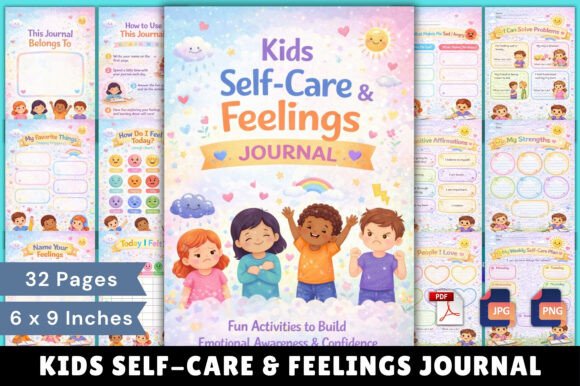
Kids Self-Care Feelings Journal: A Strategic Tool for Building Emotional Awareness and Confidence
Understanding how children process emotions is rarely straightforward. Feelings arrive unannounced, shift without warning, and often leave both child and adult searching for words. The Kids Self-Care Feelings Journal offers a structured yet flexible approach to this challenge—not as a quick fix, but as a guided practice that builds emotional vocabulary, self-awareness, and confidence over time.
For parents, educators, and caregivers who work intentionally with children, this journal represents more than a collection of prompts. It is a deliberate framework for helping children name what they feel, examine why, and decide how to respond. When used with clear goals, it becomes a practical tool for long-term emotional development rather than a one-time activity.
What the Kids Self-Care Feelings Journal Actually Provides
At its core, this journal is a structured workbook that guides children through a series of exercises designed to build emotional literacy and self-care habits. The Kids Self-Care Feelings Journal Fun Activities to Build Emotional Awareness Confidence component includes drawing prompts, reflection questions, gratitude logs, affirmation practices, and mood tracking sections. Each activity serves a specific purpose: helping children translate internal experiences into external expression.
What distinguishes this resource from generic activity books is its intentional sequencing. Rather than random exercises, the journal follows a progression that moves from basic identification of feelings to more complex skills like self-regulation, empathy, and positive reframing. This structure matters because emotional learning is not linear—but having a roadmap helps both the child and the adult facilitating the work.
The Strategic Value of a Feelings Journal for Child Development
Using a feelings journal strategically means recognizing that emotional skills are foundational to nearly every other area of development. A child who can articulate frustration rather than acting it out has a distinct advantage in academic settings, social interactions, and eventually professional environments. The Kids Self-Care Feelings Journal supports this by providing consistent, low-stakes opportunities for practice.
From a planning perspective, integrating this journal into a child's routine—whether at home or in a classroom—creates a predictable structure for emotional check-ins. This consistency helps children build the habit of self-reflection before it is needed in high-pressure moments. The goal is not to eliminate difficult feelings but to equip children with the language and tools to navigate them.
How to Use the Journal with Intention, Not as a Fill-in Activity
The most common mistake adults make with workbooks like this is treating them as tasks to complete. A child who rushes through a gratitude prompt or draws without reflection gains little more than compliance. Strategic use requires the adult to frame each activity as an invitation rather than an assignment.
Before introducing any page, ask yourself: What is the goal here? If the aim is to help a child recognize patterns in their mood, the mood tracker becomes more valuable when reviewed weekly rather than filled out mechanically. If the goal is confidence building, affirmation exercises work best when the child connects them to a real situation they faced that day.
Practical Examples of Intentional Use
A parent might use the Kids Self-Care Feelings Journal Fun Activities to Build Emotional Awareness Confidence section after a challenging sibling interaction. Instead of simply completing the page, they sit with the child and ask: What happened just before you felt angry? What did your body feel like? This turns the journal into a tool for post-event reflection rather than a standalone exercise.
In a classroom setting, a teacher might dedicate ten minutes at the start of the day to a single prompt from the journal. Over several weeks, students begin to develop a shared vocabulary for emotions. This consistency supports not only individual growth but also group dynamics—children become more able to articulate their needs and understand their peers.
Aligning the Journal with Broader Goals for Emotional Growth
The Kids Self-Care Feelings Journal works best when it is part of a larger approach to emotional education. It is not a replacement for conversations, modeling, or professional support when needed. However, it serves as a reliable anchor point—a consistent practice that reinforces the lessons taught through everyday interactions.
For caregivers aiming to build long-term emotional intelligence, the journal offers a way to track progress over months or years. A child who could only identify "happy" and "sad" in September may, by March, be naming nuanced feelings like "disappointed," "nervous," or "proud." This observable growth is one of the clearest indicators that the tool is working as intended.
When the Journal May Not Be Enough—and What to Watch For
No tool works in every context. If a child is experiencing significant emotional distress or trauma, a journal alone will not address the underlying issues. In such cases, professional guidance is essential, and the journal may serve as a supplementary resource rather than the primary intervention.
Another risk is over-reliance on the journal as a substitute for genuine emotional connection. Children learn emotional regulation primarily through co-regulation—watching how adults handle feelings and receiving support in their own difficult moments. The journal should facilitate these interactions, not replace them. When used in isolation, it risks becoming a hollow exercise rather than a meaningful practice.
Planning Your Approach: Practical Tips for Caregivers and Educators
To get the most from the Kids Self-Care Feelings Journal, consider the following strategic observations:
- Start small. Introduce one or two activities per week rather than expecting completion of multiple pages. This prevents overwhelm and allows the child to engage deeply with each prompt.
- Model the practice. Consider keeping your own journal or sharing brief reflections aloud. Children are more likely to take the work seriously when they see adults valuing the same process.
- Review together. Periodically look back at earlier entries. This helps children notice their own growth and reinforces the idea that feelings change, which is a crucial lesson in emotional resilience.
- Adapt the format. Some children prefer drawing to writing. The journal accommodates both, but an adult can encourage whichever mode feels most natural for the child at a given moment.
- Connect to real-life situations. When a child experiences a strong emotion, reference the journal. Remember when we wrote about what anger feels like in your body? Does that match what you are feeling now?
What to Consider Before Using the Journal with a Child
Not every child is ready for structured emotional work at the same age. While the journal is designed for broad use, it is worth evaluating a child's developmental stage before beginning. A child who struggles with basic labeling of emotions may need more foundational support before diving into reflection prompts. Conversely, a child who already shows strong emotional vocabulary may benefit from the more advanced activities included in the Kids Self-Care Feelings Journal Fun Activities to Build Emotional Awareness Confidence section.
It is also important to consider the child's relationship with writing or drawing. Some children find these activities freeing; others may feel pressure to produce something "good." The adult's role is to lower that pressure, emphasizing expression over performance.
Long-Term Value: What Consistent Use Can Build
Over weeks and months, regular engagement with the Kids Self-Care Feelings Journal can yield outcomes that extend far beyond the pages themselves. Children develop a habit of checking in with their own emotional state. They learn that feelings are temporary and manageable. They gain confidence in expressing needs to trusted adults. And they build a foundation of self-awareness that supports decision-making, relationships, and resilience well into adolescence and adulthood.
For the adults guiding this process, the journal offers something equally valuable: a window into the child's inner world. Entries can reveal patterns, concerns, or strengths that might otherwise go unnoticed. This insight allows caregivers to respond more effectively and to tailor their support to the child's actual experience rather than assumptions.
A Grounded Perspective on a Practical Tool
The Kids Self-Care Feelings Journal is not a miracle solution. No single resource can teach emotional intelligence on its own. But as part of a thoughtful, consistent approach to emotional education, it holds genuine value. The key is to use it with intention—to see it as a scaffold for conversation, reflection, and growth rather than a checklist of tasks to complete.
When adults approach this journal as a strategic partner in a child's development, the results tend to be meaningful. Children feel heard, learn to hear themselves, and develop habits that serve them long after the last page is filled.