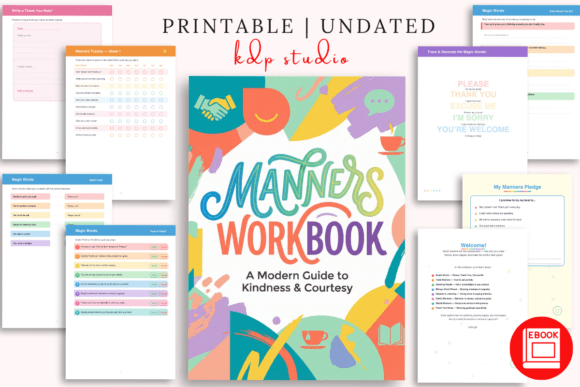
Manners Workbook – A Strategic Tool for Building Social Skills and Confidence
Teaching children how to navigate social situations with confidence and respect is one of the most valuable investments any parent, educator, or mentor can make. The Manners Workbook is not just a collection of activities—it is a structured, interactive resource designed to help children internalize the habits that underpin positive relationships, effective communication, and considerate behavior. For adults who guide children, understanding how to use this workbook strategically can transform it from a simple pastime into a powerful tool for long-term development.
What the Manners Workbook Offers Beyond Simple Etiquette
At first glance, a workbook about manners might seem like a straightforward guide to saying “please” and “thank you.” But the Manners Workbook goes deeper. It addresses the core competencies of social intelligence: empathy, active listening, gratitude, and self-awareness. These are not just “nice to have” traits; they are foundational skills that affect how children approach learning, resolve conflicts, and build relationships later in life.
The workbook covers topics such as greetings, table manners, digital etiquette, and public behavior. Each section includes scenarios that ask children to think critically about their actions and the feelings of others. This reflective element is what makes the workbook strategically useful for adults who want to instill lasting behavioral change rather than just enforce rules.
For example, the section on digital manners does not merely list “do not interrupt” or “think before you type.” It prompts children to consider how their online words might affect someone else’s day. That shift from rule-following to empathetic reasoning is exactly the kind of cognitive skill that supports better decision-making in all areas of life.
Why Social Skills Training Matters for Long-Term Goals
Professionals, educators, and business owners often focus on academic or technical skills when planning for a child’s future. Yet research consistently shows that social and emotional competencies are stronger predictors of career success, relationship stability, and overall well-being than IQ alone. Using a resource like the Manners Workbook can be a deliberate part of a broader developmental strategy.
For entrepreneurs and small business owners who also happen to be parents, the workbook offers a way to model and teach professional behaviors early. Skills such as making eye contact, greeting others politely, and expressing gratitude are directly transferable to customer interactions, networking events, and team collaboration. By using the workbook with children, adults can reinforce the same values they rely on in their own work.
Educators and homeschoolers can align the workbook with social-emotional learning curricula. The reflection pages and habit trackers provide data points that help adults see where a child is thriving and where they need more support. This makes the workbook a practical tool for planning lessons, setting behavioral goals, and measuring progress over time.
How to Integrate the Workbook into Daily Routines and Learning Plans
The Manners Workbook is most effective when used consistently rather than sporadically. Adults should think of it as a companion to everyday interactions, not a standalone course. One strategic approach is to focus on a single section per week. For example, week one might center on “Magic Words,” with the child practicing please and thank you in real conversations. Week two could shift to table manners, with the workbook activity reinforcing what they practice at meals.
This gradual layering helps children build one skill at a time without becoming overwhelmed. It also gives adults the chance to model the behavior themselves. If a child is working on active listening, the adult can demonstrate that skill during family discussions. The workbook provides prompts, but the real learning happens in context.
Another useful approach is to pair the workbook with a reward system that is tied to reflection rather than just compliance. For instance, instead of rewarding a child for saying “thank you,” reward them for noticing when someone else demonstrates good manners. This shifts the focus from external validation to internal awareness—a distinction that matters for long-term internalization of values.
For Parents and Caregivers
Parents often feel pressure to teach manners but lack a structured method. The Manners Workbook removes that guesswork. It provides ready-made lessons that fit naturally into evenings, weekends, or car rides. Parents can use the “Gratitude and Thank You Notes” section to help children write thank-you notes after birthdays or holidays, turning a routine chore into a meaningful exercise in appreciation.
For Classroom Teachers and Homeschoolers
Teachers can integrate the workbook into morning meetings or social-emotional learning blocks. The “Respect and Listening” section works well as a prelude to group work, reminding students how to take turns and acknowledge others’ ideas. The “Public Manners” section can be used before field trips, helping children understand expectations in museums, libraries, or theaters. For homeschoolers, the workbook serves as a complete mini-unit on social skills, complete with tracking and reflection.
For Coaches, Counselors, and Youth Group Leaders
Professionals who work with groups of children can use the workbook as a springboard for discussions. The real-life scenarios are excellent conversation starters. A leader might read a scenario aloud and ask the group to brainstorm alternative responses. This collaborative approach turns the workbook into a tool for building group norms and mutual respect.
Strategic Considerations Before Using the Workbook
Like any developmental resource, the Manners Workbook works best when it aligns with clear goals. Adults should ask themselves: What specific behaviors do I want to see improve? Is it mealtime behavior, online communication, or general politeness? Having a clear focus prevents the workbook from becoming just another activity that gets completed without reflection.
Another consideration is the child’s age and readiness. The workbook is designed to be engaging and accessible, but some sections may be more relevant for certain age groups. A younger child might benefit most from the “Magic Words” and “Greetings” sections, while an older child or preteen might engage more deeply with “Digital Manners” and “Being a Good Friend.” Adults should feel free to move between sections rather than following a strict sequential order.
It is also worth considering the child’s temperament. For a child who is naturally shy, the “Greetings and Introductions” section might need to be approached slowly, with an emphasis on small steps rather than perfect execution. For a child who struggles with impulse control, the “Active Listening” exercises can be practiced in short bursts. Tailoring the pace and emphasis to the individual increases the likelihood of lasting change.
Avoiding Common Pitfalls When Teaching Manners
One risk of using any etiquette resource is that it becomes a tool for criticism rather than encouragement. If adults focus only on what a child does wrong, the workbook can feel punitive. The Manners Workbook is designed to be positive, but the adult’s tone matters. Praise effort, not just results. Celebrate small improvements. Use the reflection pages to help children recognize their own growth.
Another pitfall is treating the workbook as a one-time activity. Habits are built through repetition. The “Manners Trackers and Journals” section exists specifically to support ongoing awareness. Adults should revisit the trackers regularly and discuss progress in a casual, nonjudgmental way. This turns the workbook into a living document rather than a forgotten resource on a shelf.
Finally, avoid overloading the child with too many expectations at once. Focus on one or two skills per week. The goal is not to produce a perfectly mannered child overnight but to build a foundation that will serve them for a lifetime. Patience and consistency are far more effective than intensity.
Measuring Progress and Reinforcing Lessons Over Time
The Manners Workbook includes habit trackers and writing pages, which are useful for both the child and the adult. Adults can use these to notice patterns: Is the child struggling most with waiting their turn? Are they consistently polite in public but less so at home? These observations can guide future conversations and adjustments.
Reinforcement can take many forms. Some families create a “manners jar” where they add a token each time they notice a child using a skill from the workbook. Others use the completion certificate at the end as a meaningful milestone. The key is to make the learning feel like a shared achievement rather than a checklist.
Long-term value comes when the lessons begin to appear spontaneously. A child who offers to help set the table without being asked, or who writes a thank-you note to a grandparent on their own initiative, is demonstrating that the workbook’s content has moved from external instruction to internal habit. That is the outcome that makes the investment of time worthwhile.
Using the Workbook as Part of a Broader Social-Emotional Strategy
For adults who are serious about developing a child’s character, the Manners Workbook is one piece of a larger puzzle. It pairs well with books on emotional intelligence, family meetings, community service projects, and open conversations about kindness. The workbook provides structure, but the adult’s everyday actions provide the model.
Entrepreneurs and professionals who understand the importance of soft skills in business can see the workbook as an early investment in communication, leadership, and relationship management. Educators who incorporate it into their curriculum are giving students a common language for respect and collaboration. Bloggers and content creators who write about parenting or education can use the workbook as a concrete recommendation that aligns with research on social-emotional learning.
Ultimately, the value of the Manners Workbook depends on how it is used. With clear goals, thoughtful pacing, and a supportive environment, it becomes more than a workbook—it becomes a roadmap for building the kind of character that leads to success in school, work, and life. For any adult looking to help a child thrive socially and emotionally, this resource offers a practical, actionable starting point that respects the child’s developmental journey while keeping the adult’s strategic goals in view.