ADHD Skills Workbook for Kids Canva Kdp: A Real-World Tool for Building Focus and Confidence
If you have a child with ADHD, you know that the gap between “I want to do this” and “I actually did it” can feel like a canyon. Planners designed for neurotypical kids often miss the mark—they assume a level of executive function that just isn’t there yet. That’s where something like the ADHD Skills Workbook for Kids Canva Kdp steps in. It’s not just another activity book; it’s a practical, flexible system that adapts to the chaos of real life. Whether you’re a parent trying to get through a school morning without tears or a teacher looking for a way to help a student stay on task, this workbook offers something tangible.
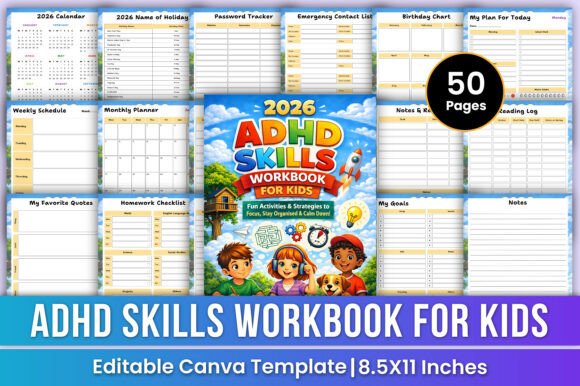
What makes it stand out? It’s built for the modern world: you get an editable Canva link, high-quality print PDFs, and a full 2026 calendar integrated with daily, weekly, and monthly planners. But beyond the features, what does it actually look like when someone uses it? Let’s walk through some common scenarios.
Real Morning Routines, Real Results
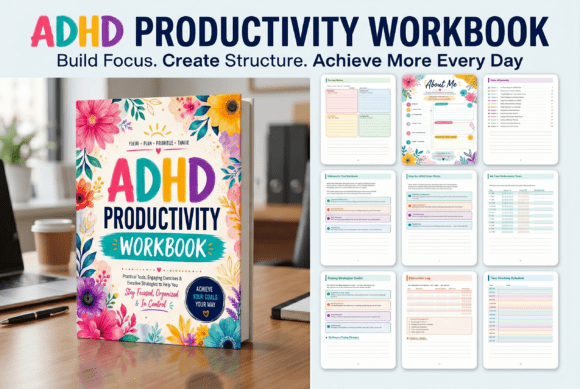
Picture this: it’s 7:15 AM, and your eight-year-old is staring at a half-eaten bowl of cereal while you’re desperately trying to find their left shoe. The usual checklist on a whiteboard? Ignored. The app on your phone? They can’t see it. The ADHD Skills Workbook for Kids Canva Kdp includes a daily planner page with sections for morning tasks, school work, chores, mood, and gratitude. You print it out, slide it into a clear sleeve, and use a dry-erase marker. Now your child has a physical, tactile reminder that lives right on the kitchen counter. They check off “brush teeth,” “pack backpack,” and “eat breakfast” one by one. The mood tracker lets them circle how they’re feeling—often a simple emoji face is enough to open a conversation about anxiety before school.
For parents, the benefit isn’t just a smoother morning; it’s that the workbook is fully customizable. Through the editable Canva link, you can change “school work” to “room tidy” or adjust the chore list based on your child’s age. The 2026 date means you don’t have to hunt for a new planner mid-year—it’s all there, ready to go.
Beyond the Home: Classrooms and Homeschool Settings
Teachers and educators face a different set of challenges. A classroom with thirty students doesn’t allow for one-on-one coaching all day. The ADHD Skills Workbook for Kids Canva Kdp can be a quiet ally. The homework tracker and school checklist sections give a student a clear visual of what’s due and what’s done. Instead of relying on memory or a messy notebook, they have a structured page that feels less like a chore and more like a game.
I spoke with a third-grade teacher who uses this workbook with two of her students who have ADHD. She prints the weekly planner pages and staples them into a folder. Each Monday, the student fills in the week’s assignments and homework. The exam timetable page is especially useful before test weeks—students can color-code subjects, which turns planning into a creative activity. The teacher noticed that the simple act of physically checking a box gave her students a sense of accomplishment that a digital tool never did.
Homeschoolers have a different need: structure without rigidity. The wellness planner and habit tracker help build routines that aren’t tied to a school bell. A parent might use the 30-day challenge pages to encourage a new habit, like reading for fifteen minutes or tidying up after a craft project. The vision board and bucket list pages are a fun way to keep motivation high. One homeschool mom told me that the gratitude section became a favorite part of their morning circle—each child writes one thing they’re grateful for, and it sets a positive tone for the day.
Building Skills That Stick: Trackers and Goals
One of the underrated strengths of the ADHD Skills Workbook for Kids Canva Kdp is how it addresses executive function in small, manageable bites. The goal setting and habit tracker pages aren’t just fill-in-the-blank; they’re designed to be revisited weekly. A child might set a goal like “finish homework before 5 PM” and then track it for a month. When they see a string of checkmarks, it reinforces the behavior. The behavior tracker is another useful tool—it’s not about punishment but about helping a child recognize patterns. If Tuesday afternoons always show a red mark for “frustration,” maybe that’s the time they need a sensory break or a snack.
There’s also a wellness planner that goes beyond schoolwork. It includes sections for physical activity, sleep, and mood. Especially for kids with ADHD, sleep and exercise are huge factors in focus. The workbook makes it easy for parents to see correlations: did a late bedtime lead to a rough morning? The data is right there, and because you can customize the Canva template, you can add or remove categories to fit your child’s specific needs.
Practical Considerations Before You Print
Before you dive in, let’s talk about what this workbook is and isn’t. It’s not a magic cure—no workbook replaces professional support, medication, or therapy if those are needed. It’s a tool, and like any tool, it works best when used consistently. Some parents find that laminating the pages or using page protectors extends their life, especially if your child likes to rip or crinkle paper. The high-quality print PDF files are easy to use at home or at a copy shop, but if you’re a teacher printing thirty copies, the editable Canva link is a lifesaver—you can tweak the fonts, colors, and layout to be more printer-friendly.
One limitation to keep in mind is that the workbook is designed for kids who can at least read simple words or recognize icons. Very young children or those with significant learning delays may need heavy parental assistance. But even then, the visual nature of the pages (with space for drawings and stickers) can be adapted. The fun pages—like a vision board and favorite quotes—are engaging for almost any age.
Another consideration: the workbook is for the 2026 calendar year. If you’re purchasing it in late 2025, you can start using the undated habit tracker and general pages right away, but the calendar-specific pages will need to wait. However, because you get an editable Canva link, you could theoretically adjust the dates manually if you need to start earlier.
Who Else Can Benefit? Unexpected Use Cases
You might think this workbook is strictly for kids with ADHD, but I’ve seen it used in other contexts too. A pediatric occupational therapist I know uses the daily planner pages with her clients during sessions. The mood and gratitude sections help open conversations about emotional regulation. Another user—a summer camp counselor—adapted the 30-day challenge pages for a group activity, turning skill-building into a friendly competition.
Parents who don’t have children with ADHD but have kids who are simply disorganized or anxious also report value. The structure is universal. The ADHD Skills Workbook for Kids Canva Kdp happens to be marketed toward ADHD, but its principles apply to any child who needs a little extra help with routine, focus, or self-awareness. The editable nature means you can remove the ADHD-specific language and just keep the planners and trackers.
For adults themselves? While it’s marketed for kids, some resourceful parents have confessed to using the weekly planner pages for their own schedules. The compact layout and simple design can be a refreshing break from overly complex adult planners. That’s the beauty of a customizable resource—you can stretch it to fit wherever there’s a need.
Strengths That Make a Difference
The biggest strength of this workbook is its flexibility. You’re not stuck with a pre-printed book that you can’t change. The editable Canva link means you can resize boxes, change the order of sections, or even translate it into another language if needed. The inclusion of a password tracker and emergency contact page is a thoughtful touch—it turns the workbook into a tiny binder of essential life info that a child can carry to school or keep at home.
The variety of pages—from meal planners to reading logs to bucket lists—means you can rotate materials based on what your child currently struggles with or enjoys. Some weeks you might focus on homework organization; other weeks you might use the behavior tracker to tackle screen time limits. The 30-day challenge pages are great for building momentum, and the vision board offers a creative outlet that doesn’t feel like work.
From a quality standpoint, the print-ready PDF files are clean and high resolution. The design isn’t overly childish—it uses a simple, modern layout with enough color to be engaging but not distracting. That’s a delicate balance for kids with ADHD, who can be easily overwhelmed by too many visuals. The workbook gets that right.
When It Might Not Be Enough
No resource is perfect. If your child needs heavy coaching for every task, the workbook alone won’t do the job—you’ll still need to sit with them and guide them through each step. It’s a scaffold, not a substitute for adult involvement. Also, the physical format means you have to print and organize it. Some people prefer a fully digital solution that syncs across devices. If that’s you, this workbook might feel a bit old-school. But for many parents and teachers, having something tangible that a child can hold and mark up is exactly what works best.
Another thing to note: the workbook is 50 pages. If you print everything at once, it can feel like a lot. A better approach is to print a few pages at a time—maybe the weekly planner and habit tracker—and only expand once your child is comfortable. The Canva link makes it easy to pick and choose which pages to output.
Overall, the ADHD Skills Workbook for Kids Canva Kdp hits a sweet spot between structure and freedom. It acknowledges that kids with ADHD need help with organization, but it also respects their individuality by being customizable. Whether you’re a parent trying to survive the homework hour, a teacher supporting a diverse classroom, or a homeschooler building a daily rhythm, this workbook offers a practical starting point. It’s not about perfection—it’s about progress, one checked box at a time.