Exploring FINANCE EBOOKS: A Practical Guide to Building Financial Confidence
Personal finance can feel like a maze of conflicting advice, unfamiliar terms, and competing priorities. Many adults in their twenties, thirties, and forties find themselves asking the same questions: Where is my money actually going each month? Why does saving feel so difficult? And how do I even begin investing without making a costly mistake? These concerns are common, and they point to a broader need for clear, structured guidance.
FINANCE EBOOKS offers one approach to addressing those questions. This 30-page beginner-friendly guide focuses on breaking down core money concepts into manageable steps. Rather than assuming prior knowledge, it starts with the fundamentals and builds upward, making it a resource worth considering for anyone seeking financial clarity.
What FINANCE EBOOKS Offers and How It Differs from Other Resources
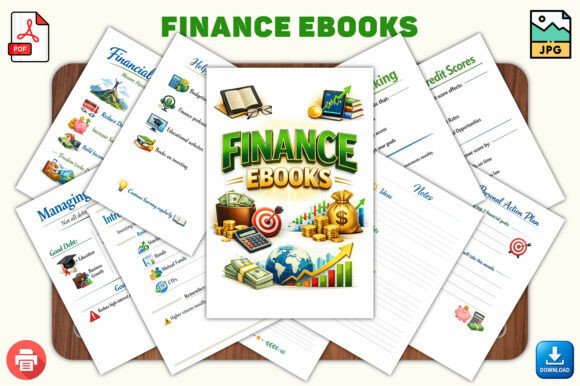
At its core, FINANCE EBOOKS covers several key areas: budgeting basics, expense tracking, emergency fund planning, debt and credit understanding, investing fundamentals, and the development of a financial mindset. It also includes reflection and action planning pages, which encourage readers to apply what they learn rather than simply reading passively.
What distinguishes this particular ebook from other personal finance materials is its focus on accessibility. The content is designed to be clean, modern, and easy to follow, with an emphasis on practical steps rather than theoretical concepts. Many personal finance books run several hundred pages and can feel overwhelming to someone who is just starting out. FINANCE EBOOKS condenses the essentials into a compact format that can be worked through in a matter of days, which may appeal to those with limited time or attention.
Compared to online courses or video tutorials, an ebook offers the advantage of being self-paced and free from distractions like ads or notifications. Readers can revisit sections as needed, highlight key points, and work through the reflection pages at their own speed. This makes it a useful complement to other learning methods rather than a replacement for them.
Strengths of FINANCE EBOOKS: Who Benefits Most
For someone who has never created a budget or felt unsure about where to start with saving, FINANCE EBOOKS provides a structured entry point. The step-by-step approach reduces the risk of feeling lost or discouraged. The inclusion of expense tracking guidance, for instance, helps readers understand their spending patterns before attempting to change them, which is a foundational step that many finance resources skip over too quickly.
The ebook also addresses debt and credit understanding, which is particularly valuable for younger adults who may be managing student loans or credit card balances for the first time. By explaining how credit scores work and how debt can be managed strategically, it helps demystify topics that often cause anxiety.
Investing fundamentals are covered in a way that does not assume prior knowledge. This is a notable strength because many finance guides either avoid investing altogether or dive into complex strategies that confuse beginners. FINANCE EBOOKS keeps things simple, focusing on core concepts like compound interest, risk tolerance, and the importance of starting early.
The reflection and action planning pages add a layer of accountability. Rather than just reading about what to do, readers are prompted to write down their goals, track their progress, and identify obstacles. This can make the difference between passive learning and actual behavior change.
Students, freelancers, and anyone navigating financial independence for the first time are likely to find this resource particularly useful. Because the content is general rather than tied to a specific country or financial system, it can be adapted to different contexts, though readers will need to apply the principles to their own local tax and banking environments.
Tradeoffs and Limitations: When FINANCE EBOOKS May Not Be Enough
No single resource can address every financial situation, and FINANCE EBOOKS is no exception. Its 30-page length means that each topic is covered concisely, which is both a strength and a limitation. Readers who need deep dives into complex areas like tax optimization, estate planning, or advanced investment strategies may find the coverage too brief.
Additionally, the ebook focuses on general principles rather than personalized advice. While it offers a solid foundation, it cannot replace the guidance of a certified financial planner or tax professional, especially for those with unique circumstances such as self-employment income, significant debt, or complex family financial situations.
Another consideration is the format. An ebook requires a device to read, which may not suit everyone. Some people prefer physical books or interactive tools like spreadsheets and budgeting apps. For those who learn best by doing, pairing FINANCE EBOOKS with a practical tool like a budgeting app or a simple spreadsheet could enhance the learning experience.
Compared to free resources like blog posts or YouTube videos, an ebook represents a cost investment. However, the structured, ad-free experience and the curated content can save time that might otherwise be spent sifting through inconsistent advice online. It is worth weighing the price against the value of having a clear, organized guide that covers multiple topics in one place.
There is also the question of ongoing support. A static ebook does not offer updates or community interaction. Financial regulations, tax laws, and investment options change over time. Readers should be aware that some information may become dated, and supplementing with current sources is advisable, particularly for investing and tax-related content.
Decision Factors: Choosing the Right Approach for Your Situation
Deciding whether FINANCE EBOOKS is the right choice depends on several factors. Consider where you currently stand with your financial knowledge and what you hope to achieve.
If you are completely new to personal finance and feel overwhelmed by the amount of information available, this ebook offers a manageable starting point. Its 30-page format is less intimidating than a 400-page textbook, and the structured progression from budgeting to investing helps build confidence step by step.
If you already have a basic understanding of budgeting and saving but feel stuck when it comes to investing or long-term planning, FINANCE EBOOKS may still provide useful reinforcement. The reflection pages in particular can help clarify goals and identify blind spots, even for those with some prior knowledge.
On the other hand, if you are already comfortable with budgeting and investing concepts and are looking for advanced strategies or specialized advice, you may find the content too basic. In that case, a more comprehensive book, a financial advisor, or an advanced online course might be a better fit.
For freelancers or those with irregular income, the budgeting and expense tracking guidance can be adapted, but additional resources on managing variable cash flow and tax withholding may be needed. Similarly, individuals with significant debt or complex financial obligations may want to supplement the ebook with professional advice.
It is also worth considering your learning style. If you prefer reading at your own pace and writing down reflections, an ebook aligns well with that approach. If you prefer video explanations, interactive tools, or group learning, you might use FINANCE EBOOKS as a supplement rather than your primary resource.
Practical Examples: How Different People Might Use This Resource
Imagine a recent college graduate who has never tracked their spending. They know they should save but have no idea where to start. Using FINANCE EBOOKS, they work through the expense tracking guidance, identify that a significant portion of their income goes to dining out, and set a realistic budget. The reflection pages help them define short-term goals, such as building a three-month emergency fund, and long-term goals, like starting retirement contributions.
Another scenario involves a freelancer in their early thirties who has irregular income and feels anxious about financial stability. The ebook helps them understand the importance of an emergency fund and offers a framework for budgeting based on average monthly income. While the general advice does not address specific tax considerations for freelancers, it provides a foundation that the freelancer can then build upon with additional research or professional advice.
A mid-career professional who has been saving consistently but has never invested may find the investing fundamentals section useful. They learn about compound interest and risk tolerance, and the action planning pages prompt them to open a retirement account or set up automatic contributions. For this person, the ebook serves as a catalyst for taking action rather than a source of new information.
Making an Informed Decision
FINANCE EBOOKS is not a magic solution that will instantly transform your finances. What it does offer is a clear, beginner-friendly framework that can help you move from confusion to action. It is best suited for those who are new to personal finance or who need a structured refresher to get back on track.
If you are comparing this ebook to other resources, consider the tradeoff between depth and accessibility. A longer book or course may cover more ground but may also take weeks to complete. A free blog post may cover one topic well but lacks the cohesive structure of a curated guide. FINANCE EBOOKS sits in the middle, offering enough coverage to be useful without being overwhelming.
For the best results, consider using this ebook as part of a broader learning strategy. Combine it with a budgeting app, a few reputable finance blogs, and perhaps a conversation with a financial advisor if your situation requires personalized guidance. The ebook can serve as the map, but you will need to do the driving.
Ultimately, the most important factor is your willingness to take the first step. Whether that step is reading a 30-page ebook, downloading a budgeting tool, or scheduling a consultation with a professional, the goal is to build momentum. FINANCE EBOOKS provides a low-barrier entry point that can help you start that journey with greater clarity and confidence.