Midjourney Magic Prompts: A Practical Look at 3500 Creative Starting Points for AI Art
What This Collection Actually Is
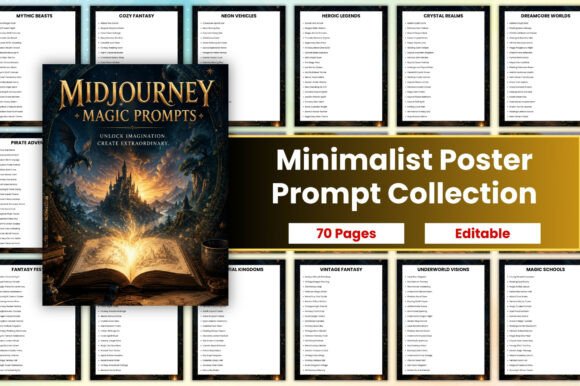
If you have spent any time generating AI art, you know the gap between a good prompt and a mediocre one. Midjourney Magic Prompts is a curated library of 3500 ready-to-use prompts built around fantasy worlds, futuristic cities, cinematic scenes, surreal environments, and many other visual styles. The prompts are organised into clear categories such as Fantasy Kingdoms, Cyberpunk Cities, Space Battles, Enchanted Forests, Ancient Civilizations, Dreamcore Surfaces, Pirate Adventures, Crystal Kingdoms, Heroic Legends, Mythical Creatures, Cozy Fantasy Interiors, Futuristic Vehicles, Cinematic Storytelling, and Sci-Fi Landscapes. The idea is simple: instead of starting from scratch every time, you open a category, pick a prompt that fits your mood, and run it through Midjourney, DALL·E, Stable Diffusion, or any other generator.
Where People Actually Use These Prompts
The most common setting is a designer or artist who needs visual references fast. A concept artist working on a game might need a dozen different castle designs in one afternoon. Instead of mentally constructing each prompt from zero, they browse the Fantasy Kingdoms section, tweak a few parameters, and generate variations until something clicks. The same applies to illustrators who want to break out of a creative rut. When your regular style starts feeling stale, dropping into an unfamiliar category like Dreamcore Surfaces or Ancient Civilisations can shift your thinking immediately.
Content creators use these prompts for channel art, video thumbnails, social media banners, and background visuals. A blogger writing about mythical creatures can pull prompts from the Mythical Creatures category and generate unique images that match the article tone. A podcaster who needs atmospheric visuals for episodes about space exploration finds the Space Battles and Sci-Fi Landscapes sections useful. The prompts save time that would otherwise be spent brainstorming descriptions.
Marketing teams and small business owners also benefit. If you run a brand that sells fantasy-themed merchandise, gaming accessories, or even home decor with a mystical aesthetic, having a collection of prompts on hand lets you test visual directions quickly. You can generate product mock-ups, mood boards, or social media posts without hiring an illustrator for every single iteration. The prompts become a rapid prototyping tool for visual identity.
When It Becomes More Than a Prompt List
The collection really shines when you treat it as a learning resource. A beginner who has never written a detailed prompt can study the structure of the entries. Each prompt in Midjourney Magic Prompts is crafted with specific elements that describe setting, mood, lighting, texture, and composition. Over time, you internalise those patterns and start writing your own prompts more effectively. For educators running workshops on AI art or digital creativity, the collection provides concrete examples that students can analyse and modify. It moves the conversation from abstract theory into hands-on practice.
Freelancers and agencies use it to speed up client presentations. Imagine a client asking for a futuristic city concept but they are not sure which direction they prefer. You generate five variations from the Cyberpunk Cities category, show them options, and let them narrow down the aesthetic before you invest time in a polished final piece. That workflow saves hours of back-and-forth and makes the whole process feel collaborative.
How Different Users Get Different Value
Hobbyists and weekend creators appreciate the flexibility. If you only create AI art for fun, you do not want to spend an hour crafting a single prompt. You want to open a category, pick something that excites you, and see what the generator produces. The Cozy Fantasy Interiors and Enchanted Forest categories are popular for personal wallpapers or simply exploring moods. The prompts remove friction from the creative process, so you can spend more time enjoying the output.
Professional designers and illustrators use the collection as a reference library. Even if you never use a prompt exactly as written, scanning through the categories sparks ideas for colour palettes, lighting scenarios, or compositional structures. The Pirate Adventures and Ocean Realms prompts, for example, might inspire a set of illustrations for a book cover even if the final artwork is hand-drawn. The prompts serve as a catalyst rather than a final destination.
Entrepreneurs and small business owners find the collection helpful for branding experiments. A business that sells crystal-related products or celestial decor can use the Crystal Kingdoms and Celestial Cities prompts to generate concept images for packaging, website headers, or ad creatives. The ability to generate high-concept visuals without a full production budget is a real advantage for early-stage businesses.
Storytellers and writers use the prompts for world-building. If you are writing a fantasy novel and need to visualise a specific location, describing the scene in words is one thing. Generating an actual image from a prompt in the Fantasy Kingdoms or Mythical Creatures category gives you a concrete reference that keeps your descriptions consistent. It also helps when communicating with cover artists or illustrators later.
Educators and workshop facilitators build entire lessons around the categories. They introduce students to different genres of AI art, then let them experiment with prompts from a particular category. The structure of the collection makes it easy to assign exercises like modify a prompt from the Sci-Fi Landscapes section to change the time of day or compare the visual output of a prompt from Dreamcore Surfaces versus Ancient Civilisations.
Practical Considerations Before Diving In
No prompt collection works perfectly out of the box for every situation. The generators you use, the version of the model, and your personal taste all influence the final image. Midjourney Magic Prompts is designed as a starting point, not a guarantee. You will likely need to adjust parameters like aspect ratio, style weight, or even certain keywords depending on the look you want. That is normal and expected with any prompt library.
Another thing to keep in mind is the difference between generating for personal inspiration and generating for commercial use. If you plan to sell or license images created with these prompts, check the terms of your AI art platform and the specific collection you are using. Most prompt collections are intended to be tools that help you create your own work, but final usage rights depend on the software and the specific license of the resource you purchased.
The collection is formatted as editable and printable pages. That means you can rearrange prompts, add notes, or create your own subcategories. Some people print a selection and keep it at their desk for quick reference. Others import the pages into a note-taking app and tag them by project type. The format supports both organised and messy workflows, which is useful because creative work rarely follows a tidy process.
If you are new to AI image generation, start with one category that genuinely interests you. Generate a few images as written, then experiment with small changes. Swap a word here, add a colour reference there. That low-pressure exploration teaches you more about prompt engineering than reading theory ever will. The variety in Midjourney Magic Prompts gives you room to find your own preferences without feeling overwhelmed by choice.
Connecting Features to Real Outcomes
The size of the collection matters, but only because it reduces the time spent searching for the right direction. Someone working on a cyberpunk game does not need to cross-reference fantasy prompts to find useful material. They go straight to the Cyberpunk Cities section and find prompts that already mention neon lights, wet streets, holographic signs, and futuristic architecture. The organisation is where the practical value lives.
The categories also help people who are not sure what they want to create. When you are stuck, browsing through Heroic Legends, Futuristic Vehicles, or Enchanted Forests often triggers an idea you would not have arrived at logically. That serendipity is the genuine benefit of a large, varied collection. It functions as a creativity prompt generator in its own right, separate from the AI tool you use to render it.
Finally, the editable format means the collection grows with you. As you become more experienced, you can annotate prompts with your own observations, mark the ones that worked best, or combine elements from different categories to create hybrid styles. A prompt from the Space Battles section might be adapted with language from the Crystal Kingdoms category to produce a cosmic fantasy scene that feels original. That kind of cross-pollination is where the collection becomes a genuine creative companion rather than just a list.
Who Should Consider This Collection
If you already use AI image generation regularly, and you find yourself repeating the same prompts or spending too much time on descriptions, this collection addresses that friction directly. If you are a visual creator who values speed and variety, the 3500 prompts represent a resource that can shorten your ideation phase significantly. For educators, marketers, writers, and hobbyists who want to explore AI art without becoming prompt engineers, it lowers the entry barrier considerably.
On the other hand, if you prefer to write every prompt from scratch and enjoy the process of constructing detailed descriptions, you might not need a curated collection. The value of Midjourney Magic Prompts is highest when you want to generate quickly, explore widely, or learn from well-crafted examples. It is a tool for practical creativity, not a replacement for personal artistic voice.
In the end, the collection works best when you treat it as a flexible resource rather than a rigid set of instructions. The prompts are meant to be borrowed, adapted, combined, and sometimes completely transformed. The categories keep you organised, but the real magic happens when you make them your own.