1000 Best Design Prompt Collection: A Practical Tool for Creative Professionals
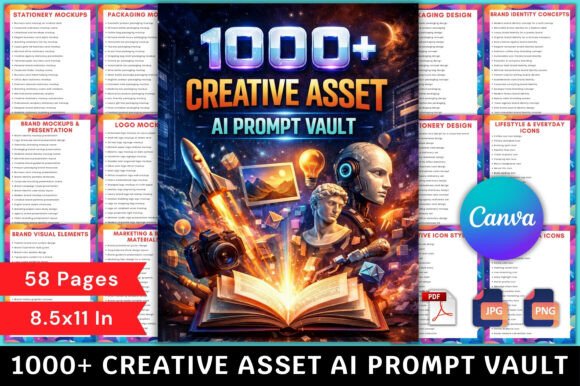
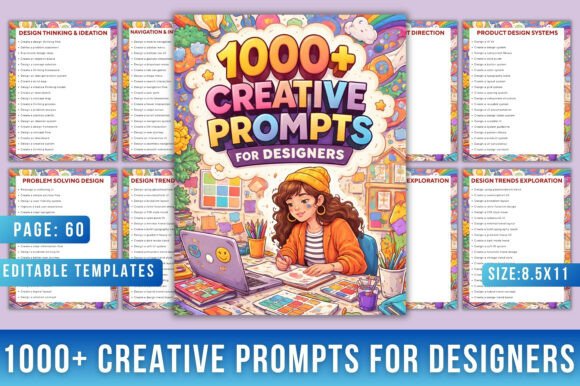
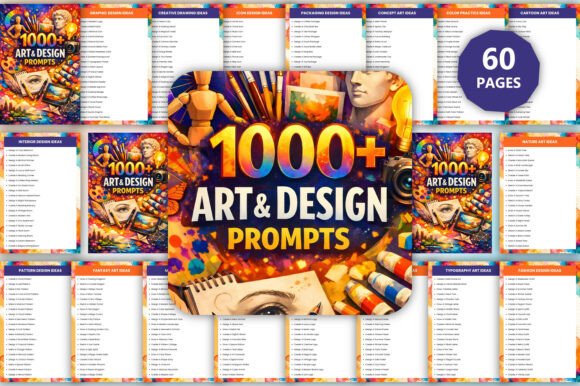
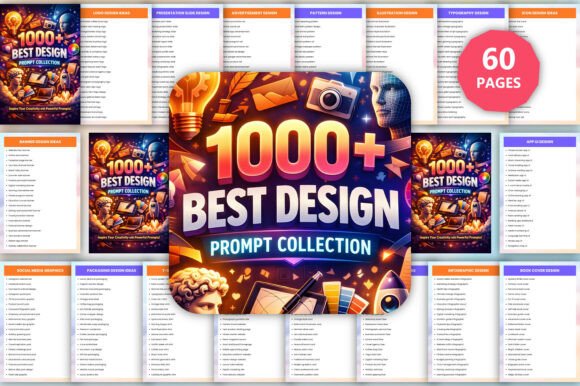
Creative blocks are a common challenge for designers, artists, and content creators who need to produce fresh work consistently. The 1000 Best Design Prompt Collection addresses this problem directly by offering a structured library of prompts across multiple design disciplines. This resource functions as a creative prompt vault, providing ready-to-use ideas for logos, branding, social media graphics, digital art, UI/UX interfaces, marketing visuals, and more. Rather than promising instant inspiration, it gives you a practical starting point for generating concepts when your own ideas stall.
What makes this collection worth examining is its breadth and organization. With one thousand prompts spanning graphic design, illustration, UI/UX, social media branding, and advanced creative concepts like motion graphics and NFT art, it covers a wider range of creative fields than many prompt resources available today. This scope suggests the creators understood that modern designers rarely work in a single discipline—they often need ideas for print projects one day and digital interfaces the next.
Understanding the Structure and Content
The collection is divided into sections that correspond to common design workflows. Graphic design prompts cover logos, posters, banners, flyers, business cards, packaging, and marketing visuals. These are the bread-and-butter projects that freelance designers and in-house creatives handle regularly. Having prompt ideas for each format means you can quickly test directions for a client brief or explore variations on a theme without staring at a blank canvas.
For digital product designers, the UI/UX section includes prompts for websites, mobile apps, dashboards, landing pages, and digital interfaces. This is a practical addition because interaction design often requires balancing visual appeal with functional clarity. The prompts here can help you think through layout approaches, color strategies, and user flow concepts before you open your design tool.
Illustrators and digital artists will find prompts for character design, mascots, icons, patterns, wallpapers, and digital artwork. These categories support both commercial illustration work and personal creative projects. The inclusion of mascot and icon prompts is particularly useful for branding projects where a custom illustration style is needed.
The social media and branding section targets the specific needs of marketers and content creators: Instagram posts, YouTube thumbnails, promotional banners, brand identity systems, and campaign visuals. These prompts align with the fast-paced content demands of social media management, where producing consistent, on-brand visuals is a recurring task.
An advanced section explores motion graphics, 3D design, NFT art, AR/VR concepts, game UI design, and futuristic projects. This forward-looking content may appeal to designers who want to experiment with emerging formats or build skills in new areas.
Real-World Applications and Practical Value
In practice, the 1000 Best Design Prompt Collection works best as a reference tool rather than a step-by-step tutorial. If you are a freelance graphic designer working on a branding package for a local coffee shop, you might browse the logo and packaging prompts to find a starting concept, then develop it further based on the client's specific needs. Similarly, a UI designer building a dashboard for a fitness app could scan the UI/UX section for layout ideas and then adapt them to the project's data visualization requirements.
Content creators managing multiple social channels can use the social media prompts to plan a month of posts without repeating formats. For example, the collection includes prompts for promotional banners, Instagram carousels, and YouTube thumbnails—three distinct content types that often need to coordinate visually under a single brand identity.
Digital artists experimenting with AI image generation tools will find the prompt library especially useful. Many AI art platforms rely on detailed text prompts to produce specific outputs, and having a curated set of design-focused prompts can save time compared to writing them from scratch. The illustration and digital art categories provide clear descriptive language that transfers well to text-to-image systems.
Who Benefits Most from This Collection
Several groups are likely to find this resource valuable:
- Freelance graphic designers who need to generate multiple concepts quickly for different clients. The variety of prompt categories means you can switch between logo design, packaging, and social media work without losing momentum.
- In-house marketing designers responsible for producing consistent brand visuals across print and digital channels. The branding and social media sections align well with the repetitive but varied workload of marketing teams.
- UI/UX designers working on web and mobile products who want to explore layout variations and interface concepts before committing to a direction. The digital interface prompts can serve as starting points for wireframes or high-fidelity mockups.
- Digital artists and illustrators looking for character concepts, pattern ideas, or thematic artwork prompts. This group benefits from the range of styles and subjects covered in the illustration section.
- AI image creators who need structured prompts to feed into generative tools. The descriptive prompts in this collection reduce the guesswork of writing effective text inputs.
- Small business owners and entrepreneurs who handle their own design work can use the prompts to create social media content, simple branding elements, or marketing materials without hiring a designer for every task.
- Educators and workshop facilitators teaching design fundamentals may incorporate the prompts as classroom exercises or assignments, giving students concrete starting points for practice projects.
Quality, Usability, and Flexibility
The quality of any prompt collection depends on how well the prompts balance specificity with room for creative interpretation. Overly detailed prompts can constrain original thinking, while vague prompts offer little guidance. The 1000 Best Design Prompt Collection generally strikes a practical balance: prompts provide enough context to suggest a direction but leave space for the designer to apply their own style and judgment.
Usability is strong because the collection is organized by creative discipline, making it easy to locate relevant prompts for a given project. You are not forced to browse through unrelated categories to find what you need. The file formats included are standard and accessible, though the specific file types are noted in the product description—it is worth confirming compatibility with your preferred tools before purchase.
Flexibility is a notable strength. Because the prompts are text-based and format-agnostic, they can be applied across different software and mediums. A prompt intended for a poster design could easily be adapted for a digital banner or social media graphic. This cross-format utility extends the practical value of the collection beyond its listed categories.
Limitations to Consider
No resource is without constraints. The 1000 Best Design Prompt Collection provides ideas, not instruction. Beginners who need step-by-step guidance on executing a design concept may need to supplement the prompts with tutorials or formal training. The collection assumes a baseline level of design skill and familiarity with creative tools.
Additionally, while the advanced section covers emerging fields like NFT art and AR/VR, these prompts may be less actionable for designers who are not already working in those areas. The concepts are directional rather than technical—they suggest ideas but do not explain how to implement them in specialized software or platforms.
Some users may find that certain prompts feel similar across categories, especially when dealing with broad themes like nature, technology, or abstract concepts. This is a common characteristic of large prompt libraries, and it does not significantly detract from the overall utility of the collection. If you need prompts for highly niche or industry-specific projects, you may need to adapt general prompts to your context.
Long-Term Value and Practical Recommendations
A well-curated prompt collection can remain useful over time if the ideas are fundamental enough to outlast design trends. The 1000 Best Design Prompt Collection focuses on conceptual starting points rather than trendy visual styles, which supports longer-term relevance. Prompts centered on branding, composition, typography, and user experience address enduring design challenges that do not become obsolete with seasonal aesthetic shifts.
To get the most from this collection, consider integrating it into your regular workflow as a reference rather than a strict creative bible. Use the prompts to overcome blocks, generate initial concepts, or explore directions you might not otherwise consider. Combine the prompts with your own research, client input, and technical expertise to produce finished work that reflects both the prompt's inspiration and your professional judgment.
For designers who work in teams, the collection can serve as a shared starting point for brainstorming sessions. Team members can each select a prompt, develop a concept, and then compare approaches—a method that encourages creative divergence while maintaining a common foundation.
Content creators managing ongoing social media calendars can batch-plan using the marketing prompts, saving time on daily ideation. Assigning prompts to specific content slots in your editorial calendar can streamline production without sacrificing variety.
Assessing Fit for Your Needs
Whether the 1000 Best Design Prompt Collection fits your workflow depends on how you generate ideas and what you need from a creative resource. If you consistently produce original concepts without external input, a prompt library may feel unnecessary. But if you sometimes struggle to start a project, need to produce high volumes of work, or want to push your thinking into unfamiliar territory, this collection provides a structured, low-friction way to begin.
Professionals managing multiple client accounts may find the prompt library a time-saving asset during the ideation phase. Educators and workshop leaders can use it to create repeatable exercises without designing new prompts for every session. Freelancers who work across different design disciplines will appreciate the breadth of categories under one resource.
Ultimately, the value of any prompt collection is determined by how well it integrates into your existing process. The 1000 Best Design Prompt Collection offers a substantial, organized, and practical set of starting points for a wide range of creative projects. It does not guarantee outstanding results on its own—your skill, judgment, and effort remain the decisive factors—but it can reliably help you move from a blank page to a workable concept faster than relying on internal inspiration alone.