1000 Endless Creative Prompts
Creative blocks hit everyone—writers stare at blank pages, designers burn through variations without landing on the right concept, and marketers struggle to find fresh angles for campaigns. After spending years working in content strategy and brand development, I've tested plenty of creativity tools, and 1000 Endless Creative Prompts stands out as one of the most practical resources I've come across. It's not a theoretical guide or a collection of vague suggestions. It's a vault of 1,000 specific, imaginative scenarios designed to push your thinking in new directions.
The collection feels like a conversation starter rather than a textbook. Each prompt is compact—usually a sentence or two—but leaves room for interpretation. Some describe fantastical settings: ancient libraries floating in space, cities built inside living trees, or markets where memories are traded. Others focus on character tensions, mystery setups, or moral dilemmas. The tone is curious and open-ended, never prescriptive. You won't find "write a story about a hero" here. Instead, you'll find something like, "A cartographer discovers a mountain range that appears on no map and shifts every time someone tries to climb it." That kind of specificity triggers your imagination without locking you into a single outcome.
Visual designers and illustrators will appreciate the imagery baked into the prompts. Many describe scenes with strong visual hooks: color palettes, unusual lighting, architectural details, or creature features that beg to be drawn. The personality of the collection is playful but grounded—it respects the craft of making things. It's not trying to sell you on a lifestyle or a productivity philosophy. It just delivers raw material for your next project.
Where This Prompt Collection Adds Real Value
I've found that 1000 Endless Creative Prompts works across a surprisingly wide range of disciplines, not just traditional writing or drawing. Here are the areas where it consistently delivers:
- Storytelling and narrative design: If you're writing fiction—short stories, novels, screenplays, or even game narratives—these prompts serve as story starters, plot twists, or character backstories. Fantasy and science fiction writers will feel at home with the world-building material, but mystery, literary fiction, and even romance have plenty to draw from.
- Illustration and concept art: Artists can use each prompt as a creative brief. The scene descriptions are vivid enough to inspire a full composition but flexible enough to allow personal style. Creature design, environmental art, and character illustration all benefit from the variety.
- Content creation and marketing: Bloggers, social media managers, and content strategists can repurpose prompts as analogies, metaphors, or campaign concepts. A prompt about "a messenger who delivers only bad news but dreams of becoming a storyteller" could easily become the hook for a brand narrative about transparency and growth.
- Brainstorming sessions and team ideation: I've used these prompts in workshop settings with marketing teams and startup founders. They work as warm-ups, icebreakers, or constraints for rapid idea generation. Each prompt forces participants to build a scenario quickly, which trains the muscle of fast iteration.
- Teaching and facilitation: Educators and workshop leaders can pull prompts for creative writing classes, art therapy sessions, or innovation labs. The collection is clean—no distracting commentary or clutter—so you can focus on the exercise itself.
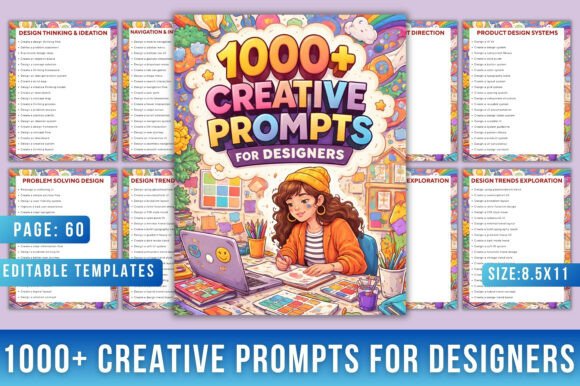
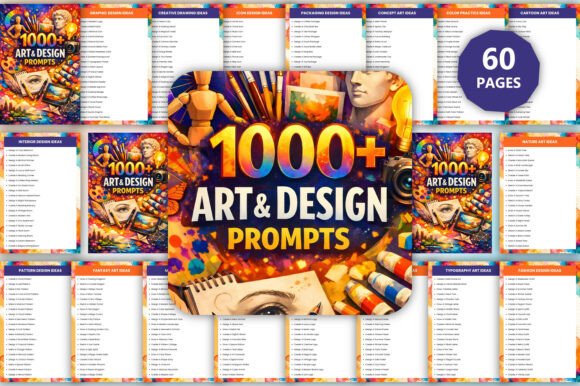
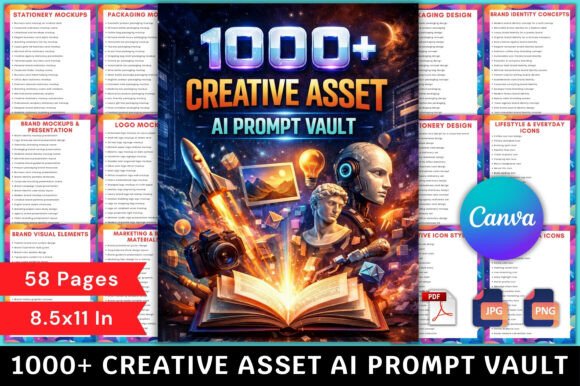
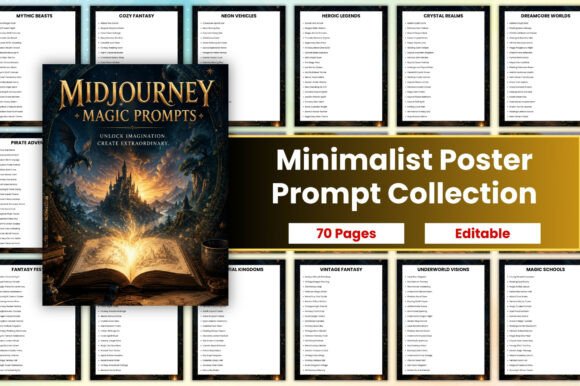
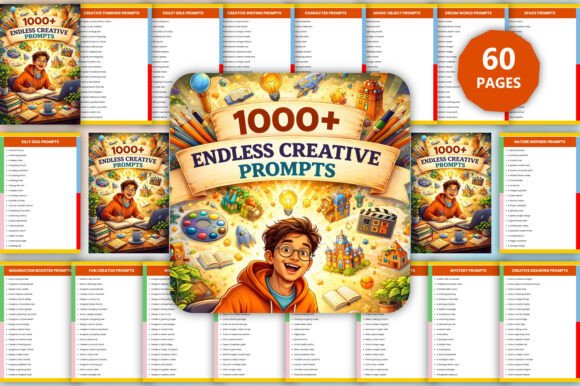
The format also matters. The files come as high-quality PDFs and JPGs, both ready for professional printing or digital use. I appreciate that the images are sharp and the layout is clean, with no watermarks or branding noise. You can drop them into a presentation, print them as cards, or use them directly on screen without reformatting. That kind of polish suggests the creators understand how working professionals actually use resources like this.
How Creative Prompts Influence Brainstorming and Idea Quality
The way 1000 Endless Creative Prompts affects your creative process has less to do with magic and more to do with structured randomness. Here's what I've observed:
It lowers the barrier to starting. The hardest part of any creative project is the first decision. A prompt removes that friction by giving you a premise. You don't have to invent a world from scratch—you just have to explore one that's been suggested. That shift from invention to exploration changes your mindset immediately. You move from "what should I create?" to "what happens next in this world?"
It introduces constraints that breed creativity. Open-ended freedom often leads to paralysis. These prompts provide boundaries—a specific setting, a conflict, a character type—that actually make it easier to generate ideas. When you know the protagonist is a mapmaker who distrusts maps, your brain starts solving the puzzle rather than wandering. That focused problem-solving is where unexpected ideas come from.
It encourages lateral thinking. Many prompts mix genres or juxtapose unrelated concepts. A prompt that combines technology with nature or fantasy with corporate culture forces you to bridge gaps you wouldn't normally consider. Over time, that habit of lateral thinking spills into your other work. You start noticing connections between unrelated projects, and your creative output becomes more original as a result.
It builds creative confidence. This is perhaps the most valuable long-term effect. When you use prompts regularly, you prove to yourself that you can generate ideas on demand. The fear of "I'm not creative enough" starts to fade. You develop a reliable process for moving from blank page to first draft, and that reliability is what separates hobbyists from professionals.
Practical Guidance for Getting the Most Out of This Resource
If you decide to add 1000 Endless Creative Prompts to your toolkit, here are some practical strategies I've developed through testing:
Use prompts as warm-ups, not just projects. Don't wait until you need a big idea. Spend ten minutes each morning responding to a single prompt—write a paragraph, sketch a thumbnail, or outline a scene. This primes your brain for the creative work that follows. Over a month, that's 300 quick exercises, and the cumulative effect on your creative fluency is significant.
Pair prompts with your existing workflow. If you're a writer working on a novel, pull a prompt that matches your genre and use it to develop a side character or a subplot. If you're a designer working on a brand identity, reinterpret a prompt as a brand story or a customer journey. The prompts don't have to replace your process—they can feed into it.
Mix and match prompts for richer scenarios. Combining two or three unrelated prompts often produces something more complex than any single one. For example, blend a prompt about a hidden underground city with a prompt about a character who can only tell the truth, and you have a compelling conflict setup. This combinatorial approach extends the lifespan of the collection significantly.
Adapt prompts for different mediums. A prompt written for a story can also work as a photography brief, a podcast episode concept, a game level design, or a brand campaign. The more you practice translation across mediums, the more versatile your creative skills become.
Review the files before printing. The PDF and JPG files are high quality and suitable for professional printing, but I recommend testing a single prompt on your intended paper or screen setup first. The images are sharp and the layout is clean, so you shouldn't encounter issues, but a quick test ensures consistency across your workflow.
Final Observations from Using This Prompt Collection
What impresses me most about 1000 Endless Creative Prompts is how it respects the user's intelligence. There's no hand-holding, no motivational fluff, no attempt to gamify creativity with points or badges. It simply provides good raw material and trusts you to do something meaningful with it. That restraint is rare in the creativity industry, where so many products overpromise with hype and underdeliver with substance.
The collection also ages well. Because the prompts are open-ended and conceptually rich, you can return to them months later and interpret them completely differently based on your current projects and interests. A prompt that inspired a fantasy illustration in January might spark a branding concept in June. That reusability makes the price feel trivial compared to the ongoing value.
If you're a designer, writer, marketer, artist, or anyone who regularly needs fresh ideas, this is a resource worth having in your arsenal. It won't do the work for you—no tool can—but it will reliably give you a starting point, a direction, and sometimes a breakthrough. And in a world where creative output is increasingly expected on demand, having a thousand starting points at your fingertips is a genuine advantage.