The Peaceful Mind Activity Book for Kids: A Complete Guide to Mindfulness, Relaxation, and Emotional Well-Being for Children
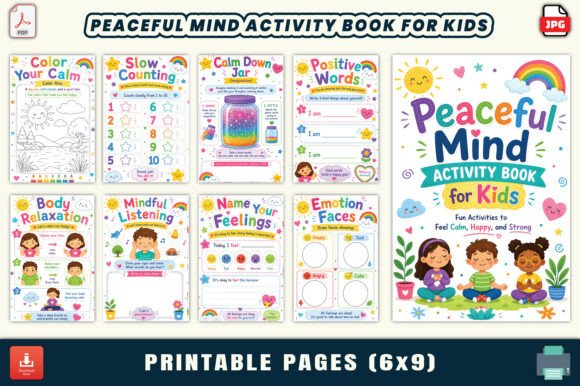
In a world that moves faster every day, children face a unique set of pressures—from school demands and social dynamics to the constant buzz of screens and schedules. Parents, teachers, and caregivers are increasingly searching for tools that help kids slow down, breathe, and connect with their emotions in a healthy way. That is exactly where the Peaceful Mind Activity Book for Kids steps in. This beautifully designed, 30-page printable workbook offers a gentle, engaging introduction to mindfulness, relaxation, and positive thinking. Whether you are a parent looking for a screen-free afternoon activity or a teacher weaving social-emotional learning into your classroom, this resource provides simple, fun, and meaningful exercises that help children ages 4 to 10 build a calm and peaceful mind.
Throughout this article, we will explore what makes a mindfulness workbook effective, how the Peaceful Mind Activity Book supports emotional development, and practical ways to use it in modern life. By the end, you will have a clear understanding of why such tools matter and how they can make a real difference in a child’s daily experience.
Understanding Mindfulness for Children: What It Is and Why It Matters
Mindfulness is often described as paying attention to the present moment with kindness and curiosity. For children, this concept can be translated into simple practices like noticing their breath, observing how their body feels, or naming something they are grateful for. Far from being a passing trend, mindfulness has been studied extensively and is linked to improved focus, reduced anxiety, and greater emotional resilience in kids.
The purpose of a mindfulness workbook like the Peaceful Mind Activity Book is to make these practices accessible and enjoyable. Instead of abstract concepts, children get hands-on activities—coloring pages, drawing prompts, breathing exercises, and gratitude lists—that gently guide them toward self-awareness. The significance of this approach lies in its consistency: when a child completes a few pages each day or week, they build a habit of checking in with themselves. Over time, this habit becomes a foundation for managing stress, handling big feelings, and developing a positive outlook.
It is important to clarify a common misunderstanding: mindfulness for kids does not require sitting still for long periods or meditating in silence. Young children learn best through movement, creativity, and play. That is why the Peaceful Mind Activity Book emphasizes drawing, coloring, and interactive prompts—activities that naturally capture a child's attention while subtly teaching emotional skills. This approach fits seamlessly into modern life, whether used during a quiet afternoon at home, as part of a homeschool curriculum, or as a calming transition activity in a classroom.
Inside the Peaceful Mind Activity Book: A Tour of Its Key Features
The Peaceful Mind Activity Book includes 30 unique activity pages designed to cover a wide range of mindfulness and relaxation techniques. Here is a closer look at what you will find inside and how each type of activity supports a child's well-being.
Breathing Exercises and Calming Techniques
Several pages are dedicated to breathing exercises—simple, visual guides that help children learn to slow their breath and calm their nervous system. For example, a page might invite a child to trace a shape with their finger while inhaling and exhaling. These exercises are especially useful during moments of frustration or overexcitement, giving kids a practical tool they can use anywhere.
Gratitude and Positive Thinking Activities
Gratitude is a powerful emotion for children to cultivate. The workbook includes prompts like "Draw something that made you smile today" or "Write down three things you are thankful for." These activities shift focus away from what is missing or difficult and toward what is good and present. Over time, this practice rewires the brain to notice positive experiences more readily.
Coloring Pages for Relaxation
Coloring is naturally meditative. The Peaceful Mind Activity Book includes detailed yet age-appropriate coloring pages that encourage focus and calm. The repetitive motion of coloring, combined with choosing colors and staying within lines, helps children enter a relaxed state similar to mindfulness meditation.
Fun Drawing and Self-Expression Prompts
Creativity is a vital outlet for emotions. Prompts such as "Draw your happy place" or "Design a superpower that helps you feel brave" invite children to express their inner world visually. This not only builds self-awareness but also strengthens confidence and imagination.
Emotional Awareness Exercises
Understanding and naming emotions is a key skill for emotional intelligence. The workbook includes pages where children can identify how they feel, match feelings to colors, or draw faces showing different emotions. These exercises help kids realize that all feelings are valid and that they have the ability to choose how to respond.
Each page is formatted at 6 × 9 inches in high-resolution JPG and PDF files, making it easy to print at home or at a print shop. The compact size is perfect for small hands and fits neatly into a backpack or folder.
How the Activity Book Supports Emotional Development in Children Ages 4–10
The Peaceful Mind Activity Book is specifically designed for the developmental stage of children between 4 and 10 years old. At this age, kids are learning to regulate their emotions, navigate social relationships, and understand their own thoughts and feelings. A workbook that combines mindfulness with creativity offers several concrete benefits.
- Stress management: Simple breathing and relaxation techniques give children a toolkit for calming themselves when they feel overwhelmed.
- Emotional vocabulary: By naming and drawing their feelings, kids expand their ability to communicate what is going on inside.
- Focus and attention: Coloring and tracing activities require concentration, which strengthens the brain's ability to focus over time.
- Self-expression: Open-ended drawing and writing prompts allow children to share their unique perspective without fear of judgment.
- Positive thinking: Gratitude exercises train the mind to look for good things, even on challenging days.
All of these benefits come together to build emotional resilience—the capacity to bounce back from setbacks and handle life's ups and downs with greater ease. For parents and teachers, seeing a child reach for their activity book when they need a moment of calm is a powerful sign that the tools are working.
Practical Ways to Use the Workbook at Home, School, or on the Go
The printable, ready-to-print format of the Peaceful Mind Activity Book makes it incredibly versatile. Here are several ways it can be integrated into daily routines.
At Home
Use a few pages as part of a morning or bedtime ritual. For example, a gratitude page in the morning sets a positive tone for the day, while a breathing exercise at night helps children wind down. The workbook also works beautifully as a quiet-time activity or as a bonding experience when done together with a parent.
In the Classroom
Teachers can incorporate the workbook into their social-emotional learning (SEL) curriculum. Use a coloring page during transitions, a breathing exercise before a test, or an emotional awareness page after recess to help students reset. The activities are short enough to fit into a 10-minute window but meaningful enough to create lasting impact.
For Homeschool Learning
Homeschooling parents will appreciate the workbook as a gentle addition to their daily lessons. It complements subjects like art, health, and even language arts (through writing prompts). Plus, it provides a structured way to address emotional development without needing a separate curriculum.
As a Gift
Looking for a thoughtful present for a child? The Peaceful Mind Activity Book makes an excellent gift for birthdays, holidays, or just because. It shows care for the child's inner world and offers hours of meaningful engagement without screens.
Common Questions About Mindfulness Workbooks for Kids
Many adults wonder whether such workbooks truly work or if children will actually engage with them. Here are a few points to consider.
Are mindfulness workbooks effective for young children?
Yes, when activities are age-appropriate and fun. The key is that the exercises feel like play, not work. Coloring, drawing, and simple prompts naturally capture children's interest while teaching valuable skills.
Do children need adult guidance to use the workbook?
Some pages are self-explanatory, but the best results come when an adult participates or discusses the activity afterward. This conversation deepens the learning and helps children connect the exercise to real-life situations.
Is the Peaceful Mind Activity Book suitable for children with anxiety or special needs?
Absolutely. The gentle, non-demanding nature of the activities makes it accessible to a wide range of children. The visual and hands-on format is especially helpful for kids who struggle with verbal expression or who benefit from structured routines.
Why Printable Formats Offer Flexibility for Parents and Teachers
The Peaceful Mind Activity Book is available in JPG and PDF formats, with 30 pages at 6 × 9 inches. This printable approach offers several advantages over a traditional bound book.
- Print only the pages you need at any given time.
- Make multiple copies for siblings or classroom use.
- Reuse favorite pages again and again.
- Print on different paper types—cardstock for durability or standard printer paper for everyday use.
- Take pages on trips without worrying about losing the whole book.
The high-resolution quality ensures that every line and detail prints clearly, whether you are using a home printer or a professional service. For busy adults, this means you can have a ready-to-use mindfulness tool in minutes.
Final Thoughts: Building a Calm and Peaceful Mind One Page at a Time
Children are not born knowing how to manage stress or understand their emotions—these are skills that must be taught, modeled, and practiced. The Peaceful Mind Activity Book for Kids provides a gentle, creative, and effective way to begin that journey. With 30 pages of breathing exercises, gratitude prompts, coloring pages, drawing activities, and emotional awareness exercises, it offers children ages 4 to 10 a toolkit for calm, happiness, and emotional strength.
Whether you are a parent looking for a screen-free activity, a teacher building a mindful classroom, or a caregiver searching for a meaningful gift, this workbook delivers real value in a format that is easy to use and ready to print. By giving children the tools to build a peaceful mind, you are not just helping them get through a tough day—you are equipping them with lifelong skills for well-being.
Explore the Peaceful Mind Activity Book today and watch as the children in your life discover the joy of slowing down, breathing deeply, and connecting with their own beautiful inner world.