Sell More with AI Prompts: A Strategic Toolkit for Smarter Marketing and Business Growth
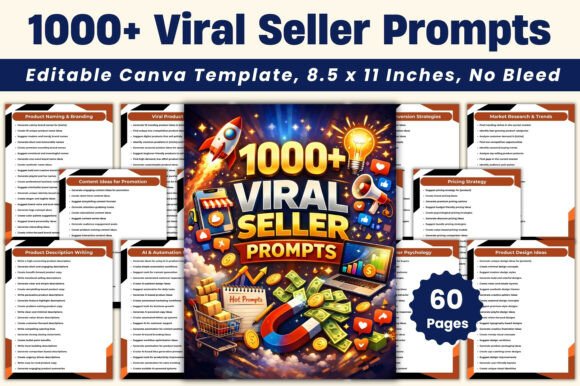
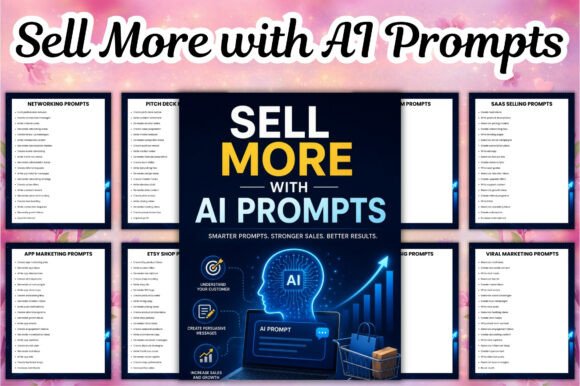
In an era where artificial intelligence tools are increasingly accessible, the difference between mediocre results and remarkable outcomes often comes down to one thing: the quality of your prompts. Sell More with AI Prompts offers a comprehensive collection of 1,000 carefully crafted prompts designed to address the full spectrum of marketing, sales, and business development needs. Whether you are an entrepreneur building a brand from scratch, a freelancer managing multiple client projects, or an experienced marketer looking to scale operations, this toolkit positions you to work more strategically with AI rather than simply asking for generic outputs.
The value of a prompt library like this one lies not in the quantity of prompts alone, but in the breadth of business functions it covers. From customer research and audience targeting to product positioning, sales copywriting, social media content, email marketing, sales funnels, paid advertising, SEO, and overall business growth, the collection functions as a structured reference for decision-making and execution. When used intentionally, these prompts move AI from being a novelty to a reliable strategic partner.
Why a Purpose-Built Prompt Collection Matters for Marketing and Sales
Generic AI interactions often produce generic results. A vague request like "write a marketing email" yields a template that may lack differentiation, emotional resonance, or strategic alignment with your brand. Sell More with AI Prompts addresses this directly by providing context-rich prompts that push AI tools to generate outputs grounded in specific marketing and sales objectives. Each prompt is designed to elicit responses that reflect an understanding of audience psychology, conversion principles, and channel-specific best practices.
For example, instead of asking for a product description, a prompt from this collection might guide the AI to analyze customer pain points, highlight key benefits in relation to competitors, and conclude with a clear call to action tailored to a specific platform. This level of specificity saves time, reduces iteration, and improves the likelihood that the final output will resonate with your target audience.
The strategic advantage here is clear: you are not just getting faster content generation. You are getting a system that helps you think through problems more thoroughly. The prompts themselves act as frameworks for analysis, forcing you to clarify your goals, audience, and value proposition before the AI generates anything. This process alone can sharpen your own strategic thinking.
How to Use the Toolkit for Customer Research and Audience Targeting
Customer research is the foundation of effective sales and marketing, yet it is often the most neglected step. Many business owners rush to create content or launch ads without a precise understanding of who they are speaking to. Sell More with AI Prompts includes prompts specifically designed to help you uncover audience motivations, segment your market, and identify unmet needs.
One practical approach is to use the research prompts as a starting point for buyer persona development. You can input demographic data, behavioral observations, or even snippets from customer interviews, and let the AI generate more detailed persona profiles, complete with emotional drivers and objections. This gives you a document you can reference across every other marketing activity, from copywriting to ad targeting.
Another use case is competitive positioning. The collection includes prompts that ask the AI to analyze competitor messaging, identify gaps, and suggest positioning angles that differentiate your offering. When used regularly, this practice keeps your strategy responsive to market shifts rather than reactive to competitor moves.
Product Positioning and Messaging: Turning Features Into Value
One of the most difficult tasks in marketing is translating product features into compelling customer benefits. The prompts in this collection guide you through that process systematically. You can start by inputting your product’s core features, then use prompts that instruct the AI to reframe those features as outcomes, emotions, or solutions to specific problems.
For instance, if you sell a time-tracking tool, a generic benefit might be "saves time." A prompt from this toolkit might lead the AI to generate messaging like "reclaim two hours every week so you can focus on high-impact work that grows your business." That shift from vague benefit to concrete, emotionally resonant outcome is exactly what separates effective messaging from forgettable copy.
The collection also includes prompts for testing multiple positioning angles. You can generate three different value propositions for the same product and test them with a small segment of your audience before committing to a full campaign. This reduces guesswork and increases the ROI of your marketing spend.
Sales Copywriting and Conversion Optimization
Writing high-converting sales pages, landing pages, and email sequences is as much a science as it is an art. Sell More with AI Prompts provides prompts that help you apply proven copywriting frameworks without having to memorize them. Whether you need a problem-agitation-solution structure, an AIDA sequence, or a feature-benefit-emotion progression, the prompts will generate copy that follows these structures naturally.
What makes this collection especially useful for conversion optimization is the inclusion of prompts that specifically ask the AI to address objections, incorporate social proof, and craft urgency-driven calls to action. You can generate multiple variations of a headline or CTA in seconds, then test which version performs best. This data-driven approach to copywriting ensures that your content is constantly improving rather than remaining static.
If you are running A/B tests on your landing pages, you can use the prompts to generate alternative versions of your headline, subheading, or hero section copy. Over time, this iterative process builds a library of high-performing copy elements that you can reuse across different campaigns.
Social Media Content and Viral Idea Generation
Consistency is the biggest challenge in social media marketing, followed closely by originality. The prompts in this collection are designed to help you generate a steady stream of content ideas that align with your brand voice and resonate with your audience. Rather than staring at a blank screen, you can use prompts that ask the AI to generate educational posts, storytelling content, engagement-driven questions, or trend-based commentary.
One strategic way to use this section is to batch-create content for an entire month in a single session. Use the prompts to generate post ideas, then refine them, and schedule them using a content calendar tool. This approach reduces the daily friction of content creation and frees up mental energy for higher-level strategy.
For brands looking to increase organic reach, the collection includes prompts focused on storytelling and relatability. A prompt might ask the AI to write a short narrative about a customer success story, or to reframe a common industry challenge in a humorous or surprising way. These types of content tend to generate more shares and comments because they feel human rather than promotional.
Email Marketing, Funnels, and Automated Sequences
Email marketing remains one of the highest-ROI channels for businesses of all sizes. The prompts in this collection cover every stage of the email funnel, from welcome sequences and lead magnets to abandoned cart recovery and post-purchase follow-ups. What sets these prompts apart is their focus on context and timing. A prompt may ask you to specify where the subscriber is in the customer journey, then generate copy tailored to that stage.
For example, a prompt designed for a cold email outreach sequence will ask for the prospect's industry, role, and pain point, then generate a personalized opening line that increases the likelihood of a response. A prompt for a re-engagement email might incorporate a survey question or a limited-time offer to trigger action.
By using these prompts consistently, you can build a library of email templates that are not only effective but also aligned with your brand voice. Over time, you will develop a collection of proven sequences that you can deploy quickly for new campaigns or product launches.
Paid Advertising: Facebook, Google, and Beyond
Advertising is one area where the cost of poor copy is immediately measurable. A weak ad reduces click-through rates, increases cost per acquisition, and wastes budget. The advertising prompts in Sell More with AI Prompts are designed to generate high-converting ad copy for platforms like Facebook, Instagram, Google, LinkedIn, and even emerging channels.
What makes these prompts especially valuable is their focus on platform-specific best practices. A prompt for Facebook ads might emphasize emotional hooks and visual storytelling, while a prompt for Google Ads might focus on keyword targeting and clear call-to-action structures. This level of nuance ensures that the generated copy is optimized for the platform’s algorithm and user behavior.
If you are running multiple ad campaigns simultaneously, you can use the prompts to generate variations of headlines, descriptions, and CTAs for different audience segments. Testing these variations systematically will help you identify winning combinations faster and reduce wasted ad spend.
SEO Content Marketing and Long-Term Organic Growth
Search engine optimization is a long game that requires consistent, high-quality content production. The SEO prompts in this collection help you generate articles, blog posts, landing page copy, and meta descriptions that are optimized for search while remaining useful to human readers. They incorporate keyword research, topic clustering, and content structuring principles that align with Google’s Helpful Content guidelines.
A practical workflow is to start with an SEO prompt that asks your target keyword and the search intent behind it. The AI can then generate an outline, a full article, or a series of related subtopics that support a pillar page strategy. This approach ensures that your content is both discoverable and valuable, which is exactly what search engines reward.
For businesses that sell on platforms like Shopify, Etsy, or Amazon, the collection also includes prompts specific to product listings, category descriptions, and customer review generation. These prompts are tailored to the unique requirements of each platform, helping you rank higher in marketplace search results without sacrificing readability.
Branding, Storytelling, and Long-Term Positioning
Beyond tactical marketing, this prompt collection also supports higher-level strategic work like brand positioning and storytelling. Prompts in this section guide you through defining your brand’s mission, vision, tone of voice, and narrative arc. You can use them to develop a brand manifesto, create a style guide, or craft a founding story that builds emotional connection with your audience.
Branding is often treated as a one-time exercise, but the best brands evolve. The prompts allow you to revisit your brand strategy periodically, test new positioning angles, and ensure consistency across all customer touchpoints. This is especially valuable for freelancers and small business owners who may not have a dedicated brand strategist on the team.
When to Use the Toolkit and What to Consider Before Starting
Sell More with AI Prompts is most effective when used as part of a structured workflow rather than as a random idea generator. Before opening the collection, define what you want to accomplish. Are you launching a new product? Revamping your email nurture sequence? Optimizing your Etsy listings? Having a clear objective will help you select the right prompts and evaluate the output critically.
A common mistake is to take AI-generated content at face value. Even the best prompts require human judgment. Always review, edit, and tailor the output to your specific context, audience, and brand voice. The prompts are a starting point, not a finished product. The more context you provide, the better the results will be.
Another consideration is frequency of use. Using the same prompts repeatedly without updating your inputs can lead to generic outputs. Refresh your inputs regularly with new customer insights, market data, or campaign performance metrics. This keeps the AI’s responses relevant and aligned with current business conditions.
Possible Risks of Using AI Prompts Without Clear Goals
While the collection is designed to be comprehensive, using it without strategic intent carries risks. The most significant risk is content homogenization. If everyone in your industry uses similar AI prompts and publishes the output without significant editing, your content may lack differentiation. Readers and customers will notice when content feels formulaic or lacks genuine insight.
Another risk is over-reliance on automation at the expense of human creativity and intuition. AI can generate ideas and drafts, but it cannot replicate lived experience, genuine empathy, or deep expertise in your specific niche. Use the prompts to augment your thinking, not replace it. Always ask yourself: does this output reflect what I truly believe about my customers and my product?
Finally, there is a risk of producing content that is technically correct but emotionally flat. Prompts focused solely on logic and structure may miss the nuance that makes content memorable. Pair the prompts with human storytelling, humor, or vulnerability to keep your content authentic.
How to Use the Toolkit Intentionally for Long-Term Results
To get the most out of Sell More with AI Prompts, treat it as a system to be learned rather than a one-time resource. Spend time familiarizing yourself with the categories and understanding which prompts align with each stage of your business cycle. Create a simple workflow: identify a specific marketing or sales challenge, select the relevant prompts, generate outputs, review and refine, and implement.
Consider keeping a journal or log of which prompts produced strong results and which need adjustment. Over time, you will build your own playbook of high-performing prompts tailored to your unique business context. This iterative learning process is where the real value lies.
The toolkit also works well for team collaboration. If you manage a marketing team or work with freelancers, you can use the prompts as creative briefs. Assign a prompt to a copywriter or designer along with the context required, and the resulting output will be more aligned with your strategic goals than a generic request.
Practical Planning Tips for Using the Collection
- Start with a specific business problem rather than browsing the collection aimlessly. Define what you need before you open the PDF.
- Batch your prompt sessions. Set aside one hour per week to generate content for the coming days. This prevents last-minute scrambling and ensures consistent output.
- Combine prompts from different categories. For example, use a customer research prompt to generate insights, then feed those insights into a copywriting prompt for a sales page. This creates a cohesive strategy.
- Test and iterate. Use the prompts to generate three versions of the same asset, then test them against each other. Let data guide your final choice.
- Document what works. Keep a spreadsheet or document with the prompts that consistently produce strong outputs, along with notes on how you customized them.
Long-Term Value and Decision-Making Guidance
The ultimate value of Sell More with AI Prompts lies not in any single piece of content it helps you generate, but in the systematic approach it instills. By consistently using prompts that force you to clarify your audience, your value proposition, and your channel strategy, you develop a habit of strategic thinking that extends beyond AI use. Over months and years, this discipline compounds into better marketing decisions, stronger customer relationships, and more sustainable business growth.
For entrepreneurs and small business owners, this toolkit can serve as a low-cost alternative to hiring a full-time copywriter or marketing strategist. For freelancers and content creators, it provides a structured way to deliver consistent results across multiple clients. For e-commerce sellers on Shopify, Etsy, or Amazon, it offers a replicable process for optimizing listings, ads, and customer communications.
Ultimately, the decision to invest time in learning and applying these prompts is a decision to treat AI as a strategic partner rather than a quick fix. When approached with intention, planning, and a willingness to iterate, this collection becomes a valuable asset for anyone serious about selling more and growing smarter.