Real Estate Agent Planner: Design Meets Strategy
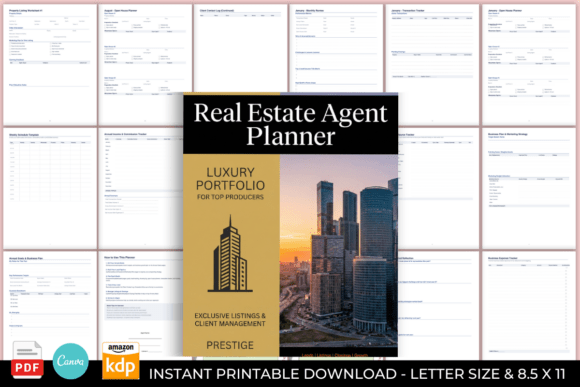
Imagine opening a planner that doesn’t just organize your schedule but elevates your entire brand. That’s the promise of a thoughtfully designed Real Estate Agent Planner—a tool where graphic design and business strategy converge. For agents, every page is an opportunity to reinforce brand identity, from the color palette and typography to the visual hierarchy that guides daily focus. Whether you’re tracking leads or mapping annual goals, the design of your planner shapes how you work and how clients perceive your professionalism.
Why Your Planner’s Visual Design Matters
A planner is more than a productivity tool—it’s a brand identity asset. When you choose a planner with intentional visual design, every spread communicates clarity and credibility. Clean typography ensures that lead trackers and commission logs are easy to scan. A cohesive color palette keeps you motivated and aligned with your personal or brokerage brand. For agents who create marketing materials or social media graphics, using the same design language across your planner and client-facing assets strengthens recognition and trust.
Practical Applications Across Your Workflow
- Branding and logo design – Incorporate your logo and brand colors into planner covers and section dividers for a cohesive look.
- Marketing materials – Use planner layouts as inspiration for flyers, brochures, and listing presentations.
- Social media content – Photograph your planner spreads as design inspiration for Instagram or LinkedIn posts that showcase your organized approach.
- Website and UI design – Translate the planner’s grid systems and visual hierarchy into your website’s dashboard layout for a seamless user experience.
- Editorial layouts – Borrow page structure ideas for quarterly newsletters or market reports.
- Packaging design – Let your planner’s aesthetic guide the look of client welcome kits or closing gifts.
- Advertising campaigns – Ensure consistency by matching ad creative with your planner’s modern aesthetics.
- Presentations – Use your planner’s charts and trackers as templates for client-facing performance reviews.
- Merchandise – Extend the same creative assets to branded notebooks, pens, or tote bags.
- Digital products – Offer downloadable planner templates as lead magnets that reflect your design workflow.
Key Design Elements That Drive Results
When selecting or customizing a planner, consider how consistency, readability, and scalability affect your daily use. A font that feels elegant but is hard to read at small sizes will slow you down. Similarly, a color palette that works beautifully in print may lose impact when photographed for digital use. Always test your planner’s layout under real-world conditions—natural light, busy desks, and quick scanning.
Typography and Visual Hierarchy
Typography is the backbone of any good planner. Headlines for monthly goals should be bold and prominent, while tracking grids need clear, legible labels. Pair a striking display font for section titles with a neutral sans-serif for data entry. This balance ensures that your planner remains both beautiful and functional—critical for agents juggling multiple transactions.
Composition and Imagery
White space isn’t wasted space; it gives your eyes room to rest and helps prioritize tasks. Incorporate design inspiration from minimalism or editorial design to create spreads that feel open yet structured. If you add imagery—like property photos or neighborhood maps—keep them consistent in tone and resolution. This elevates the planner from a simple organizer to a professional presentation tool that clients might even see during meetings.
Building a Cohesive Brand System
Your planner is part of a larger ecosystem that includes your website, social media graphics, business cards, and listing brochures. When all these touchpoints share a unified brand identity, you build brand identity recognition and trust. Choose a color palette that reflects your personality—whether that’s bold and energetic or soft and neutral—and stick with it across every asset. The same goes for typography: using the same font family in your planner and your digital marketing creates a seamless experience for anyone who interacts with your brand.
Scalability for Growing Your Business
As your pipeline expands, your planner needs to scale with you. Look for layouts that allow you to add sections for new lead sources or tracking metrics. UI design principles like modular grids and flexible templates can be applied here, letting you rearrange pages without losing visual coherence. A well-designed planner adapts to your design workflow, not the other way around.
Why Thoughtful Design Improves Communication
At its core, graphic design is about clarity. In a real estate context, that means helping you quickly see which leads need follow-up, which listings are closing, and how your commission is trending. Good visual communication reduces cognitive load—you spend less time searching for information and more time acting on it. When your planner is well-designed, it becomes a silent partner in your success, reinforcing your commitment to professional presentation and attention to detail.
The right planner doesn’t just track tasks; it shapes how you show up every day. By prioritizing modern aesthetics, visual hierarchy, and consistent brand identity, you transform a simple organizer into a strategic asset. Whether you’re reviewing quarterly performance or planning your next open house, a thoughtfully designed Real Estate Agent Planner helps you stay focused, confident, and aligned with the brand you’re building—one page at a time.